

Why Do You Dream of Waking Up? The Science of False Awakening Explained
Have you ever woken up, completed your entire morning routine, and then suddenly realized you are still in bed? This jarring experience is known as a false awakening. At Mind Body Dan, we believe understanding your sleep architecture is the first step to reclaiming your energy—and the screen-free Herz P1 Smart Ring is the perfect companion to track these deeper rest cycles.
Take Back Your Sleep.
Take Back Your Life.
- Fall asleep faster & sleep deeper
- Stop waking up in the middle of the night
- Wake up refreshed & full of energy
Key Highlights of This Guide:
- Discover the neurological mechanics behind dreaming that you have woken up.
- Understand how sleep fragmentation, high stress, and low HRV contribute to sleep disturbances.
- Learn how to recognize a false awakening loop and techniques to gently break the cycle.
- Explore how a screen-free biometric tracker can help optimize your sleep stages and daily recovery.
What You’ll Learn In This Guide:
What Is a False Awakening and Why It Happens
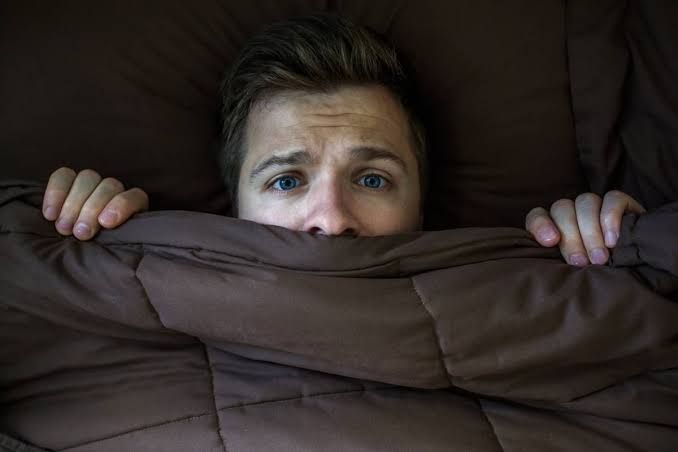
Quick Answer: Yes, experiencing a false awakening is a real, documented neurological event. The short answer is that it happens when your brain is suspended in a hybrid state of consciousness—somewhere between deep REM dreaming and wakefulness. However, to choose the right tracking tools and sleep optimization strategies, you need to understand how your sleep quality, stress levels, and nightly biometric trends influence your sleep architecture.
Have you ever experienced a night where you woke up, turned off your alarm, walked to the bathroom, brushed your teeth, only to open your eyes a moment later and realize you are still lying in bed? This baffling sensation is not just a standard vivid dream. It is a highly specific sleep phenomenon known as a false awakening.
Understanding a false awakening requires looking closely at how our brain transitions between different sleep states. Under normal circumstances, our bodies cycle through distinct phases of sleep, moving systematically from Light sleep to Deep sleep, and finally into Rapid Eye Movement (REM) sleep. During REM sleep, our brain is highly active—often matching the activity levels observed when we are fully awake—while our voluntary muscles are temporarily paralyzed. This protective state, called motor atonia, prevents us from physically acting out our dreams.
However, when our sleep becomes fragmented, these clean boundaries begin to blur. The strange phenomenon of dream waking occurs when your brain’s cognitive executive network—specifically the dorsolateral prefrontal cortex, which is responsible for self-awareness and logic—partially activates while your motor system remains firmly anchored in REM sleep. Your brain, trying to make sense of this partial wakefulness, constructs an incredibly realistic simulation of your normal morning routine.
This experience can feel entirely real because your mind uses your daily memories, sensory expectations, and environmental details to build the dreamscape. You might feel the cold tile of the bathroom floor, see the morning sunlight filtering through the window, or hear the hum of the refrigerator. It is only when a logical inconsistency arises—or when you wake up for real—that you realize you were trapped in a state of suspended sleep.
When to Track Your Sleep Anomalies (And When to Let Go)
When you experience a false awakening, your body is navigating a delicate neurological threshold. But how do you know if these events require attention, or if they are just harmless quirks of your imagination?
If you occasionally experience one of these dreams and wake up feeling refreshed and full of energy, there is no need to worry. However, if you find yourself trapped in a false awakening loop, waking up exhausted, struggling with morning brain fog, or feeling physically depleted, it is highly likely that your sleep architecture is heavily disrupted. In these cases, monitoring your underlying sleep metrics—such as your total REM duration, deep sleep consistency, and autonomic nervous system stress—is crucial to restoring balance.
Suggested Solutions: A Screen-Free Path to Clearer Biometrics
To lower the likelihood of a false awakening by stabilizing your sleep cycles, we need to address the root causes: sleep fragmentation, high stress, and evening overstimulation. Many people turn to standard smartwatches to track their sleep, only to find that the bright screens, constant notifications, and bulky designs actually increase their evening anxiety and trigger the very 3 AM awakenings they are trying to avoid.
A more elegant, screen-free alternative is the Herz P1 Smart Ring. Constructed from premium, ultra-lightweight titanium, this ring sits comfortably on your finger, allowing you to sleep naturally without bulky distractions. It uses advanced medical-grade sensors to continuously track your Heart Rate Variability (HRV), Heart Rate, and detailed sleep stages (REM, Deep, Light) without emitting any distracting blue light.
Why the Herz P1 Smart Ring Outperforms Bulky Trackers:
- Screen-Free Design: No sleep-disrupting blue light, no notifications, and absolute peace of mind at 3 AM.
- Premium Titanium Build: Ultra-lightweight and elegant. You won’t even feel it on your finger while you sleep.
- Subscription-Free Forever: Buy once, own your data forever. No hidden monthly fees.
- Advanced Biometrics: Tracks Deep, Light, and REM Sleep stages, along with real-time HRV and Heart Rate metrics.
Frequently Asked Questions About False Awakenings
Q1: Is a false awakening the same as a lucid dream?
No, though they are closely related. In a lucid dream, you become aware that you are dreaming while the dream is still happening. In a false awakening, you lack this awareness; you truly believe you are awake and performing real-world tasks within your physical environment.
Q2: Why do I experience these vivid dreams repeatedly in one night?
This is often referred to as a false awakening loop. It typically occurs when your body is highly exhausted but your mind remains in a state of high alert or anxiety. The continuous micro-arousals prevent your brain from sinking into a deep, uninterrupted sleep stage.
Q3: Can tracking my biometrics help prevent these sleep disruptions?
Yes, by tracking trends in your REM sleep and HRV, you can identify the exact nights your body is carrying too much physiological stress. This allows you to adjust your daytime recovery, evening wind-down, and stress management routines before your sleep becomes fragmented.
Navigating the False Awakening Loop: Causes, Stress, and HRV
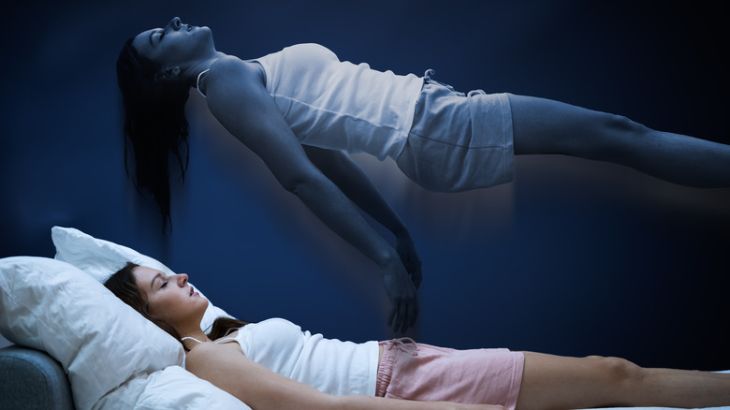
When you are caught in a false awakening loop, it is common to experience a sensation of panic. You “wake up,” try to turn on a light, realize it doesn’t work, panic, “wake up” again, and repeat the cycle. This frustrating loop highlights how closely our mental state is intertwined with our physical sleep quality.
The primary culprit behind this loop is a state of hyperarousal during the dream state. When you go to bed with a racing mind, high levels of daytime stress, or physical tension, your body fails to fully shift from the active sympathetic nervous system (fight-or-flight) to the restorative parasympathetic nervous system (rest-and-digest). This imbalance is directly reflected in your Heart Rate Variability (HRV).
— Mind Body Dan Sleep Research Team
The Role of Stress and the Autonomic Nervous System
To understand why this happens, we must look at the autonomic nervous system. Your heart does not beat at a perfectly constant interval; the variation in time between consecutive heartbeats is your Heart Rate Variability. A high HRV indicates that your body is highly adaptable, relaxed, and recovered. Conversely, a low HRV indicates that your system is under stress, exhausted, or fighting off fatigue.
When your HRV is chronically low, your sleep architecture becomes highly unstable. This physiological stress triggers frequent micro-arousals during the night, especially during REM sleep when your brain is already highly active. Because your nervous system is on high alert, your brain remains vigilant, constantly scanning for threats.
This state of alert makes you highly susceptible to waking up in a dream. Your brain simulates the act of waking up as a way to handle the internal stress signals it is receiving. If your HRV remains low throughout the night, you may experience multiple false awakenings in a single evening, leaving you with a profound sense of exhaustion by the time morning arrives.
How Sleep Architecture and REM Fragmentation Trigger Loops
Our sleep cycles are typically 90 to 110 minutes long, repeating 4 to 6 times a night. The first half of the night is dominated by deep slow-wave sleep, which is essential for physical recovery and tissue repair. The second half of the night is dominated by REM sleep, which is critical for cognitive processing, memory consolidation, and emotional regulation.
The vivid nature of false awakening dreams is directly linked to these late-night REM phases. If your sleep environment is too warm, if you drank alcohol close to bedtime, or if you are dealing with a heavy mental load, your REM sleep becomes fragmented. Instead of experiencing a solid, continuous block of REM, your brain constantly dips in and out of consciousness.
During these rapid transitions, the boundary between the dream world and wakefulness dissolves. Your brain’s sensory cortex becomes highly active, drawing on real-time sensory inputs from your actual bedroom (like the sound of wind outside or a car passing by) and weaving them directly into your dream. The result is an incredibly convincing, highly realistic false awakening.
Reclaiming Your Rest: Practical Strategies to Stabilize Your Sleep Stages

If you are tired of dealing with non-restorative sleep, frustrating 3 AM awakenings, and the mental exhaustion that follows a night of fragmented dreams, there are practical, science-backed steps you can take to stabilize your sleep stages.
By reducing the frequency of these false awakenings, you can ensure your brain spends the necessary time in deep, restorative phases of sleep, allowing you to wake up feeling genuinely refreshed.
Sleep Hygiene, Screen-Free Tracking, and Mindset Shifts
To stabilize your sleep architecture and prevent sleep fragmentation, consider implementing the following lifestyle adjustments:
- Establish a Consistent Sleep-Wake Window: Going to bed and waking up at the exact same time every day helps anchor your circadian rhythm. This consistency ensures your brain transitions smoothly between sleep stages, reducing the risk of sudden micro-arousals during REM sleep.
- Adopt a Screen-Free Wind-Down Routine: Exposure to blue light from phones, tablets, and smartwatches close to bedtime suppresses melatonin production. Melatonin is crucial for initiating and maintaining deep sleep. By keeping screens out of your bedroom, you protect your body’s natural sleep chemistry.
- Incorporate Mindfulness Before Bed: If you struggle with a racing mind or evening anxiety, practice progressive muscle relaxation, journaling, or deep breathing exercises before turning off the lights. This simple habit helps shift your autonomic nervous system from sympathetic dominance to a relaxed parasympathetic state, raising your overnight HRV.
- Avoid Alcohol and Heavy Meals Late in the Evening: Consuming alcohol or large meals within three hours of bedtime disrupts your sleep architecture. While alcohol may help you fall asleep faster, it severely fragments your REM sleep during the second half of the night, heavily increasing the impact of a false awakening on sleep quality.
Ready for Deeper, Subscription-Free Insights?
Stop guessing why you are waking up tired. Get medical-grade tracking of your REM stages, Heart Rate Variability, and Daily Recovery with a beautiful, screen-free smart ring.
By combining these practical sleep hygiene habits with a comfortable, distraction-free tracking device, you can begin to see the direct connection between your daily habits and your nightly rest. Understanding the underlying patterns behind false awakenings allows you to make data-informed adjustments, helping you sleep soundly, wake up feeling genuinely rested, and reclaim your daily energy.
Disclaimer: Results may vary depending on individual physical activity levels, unique health conditions, and daily tracking patterns. The insights provided in this article and by the Herz P1 Smart Ring are intended for educational and wellness tracking purposes only and should not replace professional medical advice. Always consult a healthcare provider for any questions regarding a potential sleep disorder, persistent insomnia, or other medical concerns.
