

7 Best Firm Mattress Options for Back Pain Relief
Are you waking up tired, fighting morning back pain and brain fog? Finding the best firm mattress can correct your spinal alignment, but how do you know it is actually restoring your body? By tracking biometric indicators like HRV and deep sleep stages with a screen-free Herz P1 Smart Ring, you can objectively measure your physical recovery.
Take Back Your Sleep.
Take Back Your Life.
- Fall asleep faster & sleep deeper
- Stop waking up in the middle of the night
- Wake up refreshed & full of energy
- Spinal Structural Alignment: How the best firm mattress selection keeps your hips and shoulders in a neutral plane, minimizing chronic muscle tension.
- Biometric Progress Tracking: Using advanced health parameters like Heart Rate Variability (HRV) and Resting Heart Rate (RHR) to prove your sleep environment is working.
- Avoiding Sleep Interruptions: Transitioning from heavy, distracting, screen-lit smartwatches to ultra-light, screen-free wearable solutions for sleep tracking.
- Selecting the Ideal Firmness: Knowing when a standard firm, extra firm, or a luxury firm mattress matches your exact sleep posture and body weight.
Why Spine Alignment Matters: The Science Behind a Best Firm Mattress

When you lie down after a demanding day, your body is supposed to enter a state of deep physical repair. However, if your bed is too soft, your pelvis—the heaviest part of your skeletal frame—sinks deeply into the layers of the mattress. This creates a destructive “hammocking” effect that pulls your lumbar spine out of its natural, neutral curve. Over the course of seven to eight hours, the muscles along your lower back are forced to contract continuously to protect your spinal cord. This involuntary muscle guarding prevents your body from entering deep, restorative sleep stages and leaves you waking up with stiffness, aches, and a high level of physiological fatigue.
To break this cycle, finding the best firm mattress is a critical first step. By providing an unyielding foundation, a firm sleep surface supports the natural alignment of your skeletal system. It distributes body weight evenly, reduces pressure points on key joints, and allows the muscular system to fully relax. The neurological result of this relaxation is profound: your body shifts from a sympathetic (fight-or-flight) state into a parasympathetic (rest-and-digest) state. When your nervous system relaxes, you experience less tossing and turning, fewer 3 AM awakenings, and a substantial increase in deep, non-restorative sleep recovery.
But how do you know if your new mattress is actually working? Subjective comfort in a showroom is notoriously misleading. True recovery validation requires objective, long-term health metrics. In this comprehensive guide, we will analyze the best firm mattress options on the market today and show you how to monitor your sleep architecture using clean, screen-free bio-tracking technology.
Our Rigorous Evaluation Methodology
To help you cut through the marketing noise, our team of sleep and human performance specialists evaluated dozens of models based on four foundational metrics. In our comprehensive firm mattress analysis, we look closely at how the mattress architecture influences physical recovery:
- Structural Support Integrity: We test the mattress’s ability to resist sagging over time, ensuring the hips remain level with the shoulders.
- Material Pressure Redistribution: We measure how effectively the top layers cushion sensitive joints, such as the shoulders and hips, without sacrificing underlying firmness.
- Thermoregulation Capacity: Elevated core body temperatures prevent deep sleep. We evaluate the airflow and heat dissipation of every layer.
- Biometric Compatibility: We study how a stable sleep surface influences physical recovery metrics, such as Heart Rate Variability (HRV) and resting pulse rates during the night.
Comparison Matrix: Best Firm Beds & Biomarker Tracking
Below is a high-level comparison of the premier structural classes of firm beds, paired with the ultimate tool for tracking their real-world impact on your physical recovery.
| Mattress Class / Tool | Firmness (1-10) | Primary Materials | Target Benefit | Validation Method |
|---|---|---|---|---|
| Luxury Firm Hybrid | 7.5 / 10 | Coils + Copper-Memory Foam | Spinal alignment with joint relief | Monitor REM and Deep Sleep cycles |
| Eco-Natural Latex | 8.0 / 10 | Dunlop Latex + Organic Wool | Hypoallergenic resilient bounce | Track resting heart rate trends |
| High-Density Solid Foam | 8.5 / 10 | High-density polyfoam layers | Elimination of motion transfer | Measure Deep Sleep percentage |
| Herz P1 Smart Ring | N/A (Wearable) | Premium Lightweight Titanium | Screen-free recovery tracking | Tracks HRV, RHR, & Sleep Scores |
Detailed Breakdown of the Premier Sleep & Tracking Solutions
1. The Premier Luxury Firm Hybrid Mattress
This design masterfully bridges the gap between structured support and comfort. Combining pocketed steel coils with high-density copper-infused memory foam, it provides targeted support for the lower lumbar spine while allowing the shoulders to sink just enough to maintain a straight spine. This is an exceptional luxury firm mattress built for sleepers who want structural integrity without sleeping on a surface that feels like concrete.
- Strengths: Superior edge support, excellent heat dissipation from copper layers, and a responsive feel that makes moving easy.
- Weaknesses: Heavier than pure foam models, making it difficult to rotate or set up without assistance.
- Ideal User: Back and combination sleepers weighing between 130 and 250 lbs who suffer from morning lumbar stiffness.
2. The All-Natural Resilient Latex Mattress
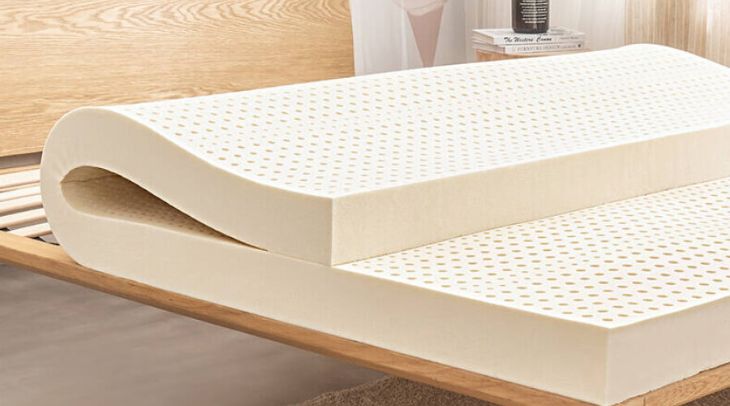
Crafted from natural Dunlop latex harvested from sustainable rubber trees, this option is naturally dense, bouncy, and highly breathable. Unlike memory foam, latex does not conform closely to your body; instead, it pushes back against your weight, creating an “on top of the bed” feeling. It is a fantastic choice for individuals searching for a good firm mattress that relies entirely on eco-friendly, non-toxic components.
- Strengths: Incredible long-term durability (often lasting 15+ years), zero chemical off-gassing, and natural resistance to dust mites and mold.
- Weaknesses: High initial financial investment; latex lacks the deep contouring sensation of traditional foam.
- Ideal User: Eco-conscious buyers, hot sleepers, and individuals who feel trapped or stuck in memory foam beds.
3. The High-Density Orthopedic Foam Mattress
Designed for maximum density and stability, this solid polyfoam mattress utilizes orthopedic layers to prevent sinkage completely. It is structured to maintain a perfectly flat surface, offering the rigid foundation needed to relieve pressure on the sciatic nerve. If you require a true firm bed for back pain, this design is built specifically to address severe misalignment issues.
- Strengths: Zero motion transfer (perfect for couples), exceptionally flat sleeping surface, and a very supportive core.
- Weaknesses: Can feel too rigid for side sleepers, potentially causing numbness in the shoulders and hips.
- Ideal User: Dedicated back or stomach sleepers who weigh over 200 lbs and need unyielding orthopedic support.
4. The Herz P1 Smart Ring (The Ultimate Sleep Validator)
Changing your mattress is only half the battle; verifying its physiological impact is where real recovery begins. The Herz P1 Smart Ring is an expert-recommended, medical-grade biometric tracker designed to run silently in the background while you sleep. Wrapped in an elegant, ultra-lightweight titanium shell, this screen-free device monitors your body’s vital metrics without the annoying light-up screens, bulky frames, or daily charging demands of traditional smartwatches.
Every night, the ring’s advanced biometric sensors track your Sleep Stages (REM, Deep, and Light), Heart Rate Variability (HRV), and resting heart rate. In the morning, it translates these complex algorithms into an intuitive Daily Recovery Score. This score tells you exactly how deeply your muscles repaired, allowing you to see if your new mattress is lowering your physiological stress and lengthening your deep sleep cycles. Best of all, the Herz P1 is completely subscription-free—meaning you purchase the device once and own all of your health insights forever.
When you sleep on a firmer surface, your body may take up to 30 nights to adapt to the new alignment. During this adjustment phase, you might feel slightly sore as your posture corrects. However, by tracking your Heart Rate Variability (HRV) with a device like the Herz P1 Smart Ring, you can see if your nervous system’s stress levels are actually declining during sleep—giving you peace of mind that your structural health is steadily improving.
- Strengths: Subscription-free model (no hidden monthly fees), featherlight titanium body, 100% screen-free to prevent evening blue-light exposure, and high-accuracy optical sensors.
- Weaknesses: Does not feature a screen for real-time daytime notification reading (which is a deliberate design choice to encourage digital detoxing).
- Ideal User: Anyone investing in their sleep health who wants an elegant, comfortable, and screen-free way to monitor and validate their physical recovery.
Choosing Your Ideal Firmness Profile
Before purchasing, keep these structural guidelines in mind to find your perfect match in selecting a good firm mattress:
- Your Primary Sleeping Position: Stomach and back sleepers need a higher level of firmness (7.5 to 8.5 out of 10) to prevent the hips from sinking. Side sleepers should target a luxury firm option (6.5 to 7 out of 10) to cushion the shoulder joint.
- Body Weight Dynamics: Sleepers under 130 lbs will perceive mattresses as much firmer than they actually are, while sleepers over 230 lbs require dense, thick supportive coils to avoid bottoming out on the support core.
- Material Off-Gassing: If you are sensitive to chemical smells, avoid cheap synthetic foams and focus on natural latex or hybrid models with environmental certifications.
Summary Recommendations
If you want the ultimate balance of deep joint relief and orthopedic alignment, we recommend the Luxury Firm Hybrid. If you are highly focused on organic materials and durability, choose the Natural Latex Mattress. Regardless of which bed you choose, pairing it with a screen-free Herz P1 Smart Ring is the smartest way to track your physiological adaptation and guarantee your body is entering deep, restorative recovery stages.
Analyzing Structural Support: Finding a Good Firm Mattress and Firm Bed for Back Pain
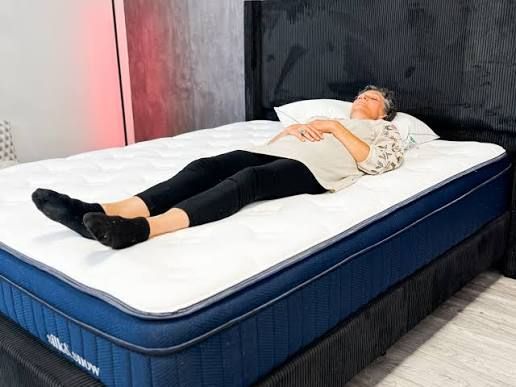
When searching for a good firm mattress, it is vital to understand that firmness is not the same as support. “Firmness” refers to how soft or hard the mattress feels when you first lie down. “Support,” on the other hand, is the mattress’s ability to push upward against your weight, keeping your skeletal structure in neutral alignment. A bed can feel incredibly hard to the touch but still sag under your hips, throwing your pelvis out of alignment. Conversely, an ideal luxury firm mattress utilizes a softer, pressure-relieving comfort layer over an unyielding, structurally sound pocketed coil system to provide the best of both worlds.
For individuals seeking an effective firm bed for back pain, the interior construction of the mattress is everything. Traditional innerspring systems feature interconnected coils that transfer motion across the bed and cause sagging in the center. Modern orthopedically designed beds use individually pocketed pocket coils. Because each coil moves independently, they compress only under direct pressure. This means the heavier parts of your body—such as your shoulders and pelvis—are supported with tailored resistance, preventing the dreaded “sag” that leads to morning back stiffness.
— Team Mind Body Dan Health Specialists
Furthermore, structural stability drastically reduces motion transfer. If you share a bed with a partner, their movements can cause micro-arousals—tiny sleep disruptions that you might not fully remember but that pull you out of deep and REM sleep stages. A stable hybrid or high-density foam mattress absorbs these vibrations. By monitoring your sleep with a lightweight, screen-free wearable, you can easily track how the structural stability of your mattress directly leads to longer, uninterrupted cycles of deep, restorative sleep.
Biometric Feedback: Validating Your Mattress Choice Beyond Subjective Comfort
Our bodies are highly complex, and assessing sleep quality based on how we feel in the first five minutes after waking is notoriously unreliable. You might wake up feeling slightly groggy simply because you woke up in the middle of a deep sleep cycle, even if your overall sleep architecture was excellent. Alternatively, you might wake up feeling alert due to high cortisol (stress) levels, even though your body got very little deep sleep the night before. This is why we must look beyond subjective impressions and rely on objective biometric data when choosing a firm bed for back pain.
When you transition to our highly recommended our guide to the best firm mattress options, your physical system goes through an adaptation phase. By tracking your physiological data during this time, you can watch your biological markers trend in the right direction. There are three key biomarkers that indicate your body is getting high-quality recovery:
- Heart Rate Variability (HRV): HRV is the variation in time between consecutive heartbeats. A higher HRV indicates that your parasympathetic nervous system (recovery mode) is dominant. When you sleep on a mattress that supports natural spinal alignment on a firm bed, your physical stress drops, and your night-time HRV naturally increases.
- Resting Heart Rate (RHR): In a supportive sleep environment, your resting heart rate should drop to its lowest point during the first half of the night. If your mattress is causing back pain and muscle tension, your heart rate will remain elevated as your body struggles to find comfort, indicating poor restorative sleep solutions are in place.
- Sleep Stage Architecture: Proper support reduces micro-arousals (waking up briefly in the middle of the night). This allows your brain to progress naturally through light sleep, deep sleep, and REM sleep cycles, helping to eliminate daytime brain fog and fatigue.
Track Your Body’s True Recovery Trends
Are you ready to see how your sleep environment affects your physical recovery? Many wellness enthusiasts find smartwatches to be too bulky and uncomfortable to sleep in. The screen light can wake you up at night, and the daily charging routine is a constant hassle. That is why smart rings have become the premier solution for elegant, screen-free, and precise recovery tracking.
By shifting away from bulky wrist trackers and choosing an elegant, titanium smart ring, you remove the distractions that keep your mind racing at night. When evaluating mattresses for lower back discomfort, the biometric data provided by the Herz P1 Smart Ring offers a clear, objective look at your health. You can easily see if your deep sleep stages are increasing and if your daily activity levels are leading to better sleep recovery.
Ultimately, your sleep environment is a foundation for your overall health. By investing in the right orthopedic bed and tracking your body’s recovery metrics with a subscription-free, screen-free smart ring, you can take control of your well-being. Say goodbye to restless nights, morning back pain, and confusing health metrics—and hello to a balanced, fully restored life.
Disclaimer: Results may vary depending on individual physical activity levels, unique health conditions, and daily tracking patterns. The content in this article is for educational and informational purposes only and does not constitute professional medical advice, diagnosis, or treatment. Always consult a qualified healthcare provider regarding any back pain or sleep concerns.
