

5 Pillow Firmness Scale Secrets for Ultimate Neck Support
If you are waking up with a stiff neck or tossing and turning in the 3 AM quiet, your pillow might be to blame. Achieving restful, restorative sleep requires proper cervical alignment. By matching your sleeping posture to the right pillow firmness scale, and tracking your recovery with the screen-free Herz P1 Smart Ring, you can finally reclaim your energy.
Take Back Your Sleep.
Take Back Your Life.
- Fall asleep faster & sleep deeper
- Stop waking up in the middle of the night
- Wake up refreshed & full of energy
- Cervical Spinal Alignment: Keeping your neck in a neutral posture is key to minimizing muscular strain and stopping midnight awakenings.
- The Decisive Scale: Understanding the pillow firmness scale (from Soft/Plush to Extra Firm) prevents muscle fatigue and chronic neck pain.
- Customization Is King: Your sleeping position (side, back, or stomach) dictates where your ideal comfort sits on the pillow firmness scale.
- Scientific Measurement: Biometric tracking—especially Heart Rate Variability (HRV) and Deep Sleep stages—proves whether your pillow setup is working.
- The Screen-Free Tracking Path: Sleek tools like the Herz P1 Smart Ring monitor your recovery trends without the annoying distraction of screens or monthly app fees.
The Science of Spinal Alignment & The Pillow Firmness Scale
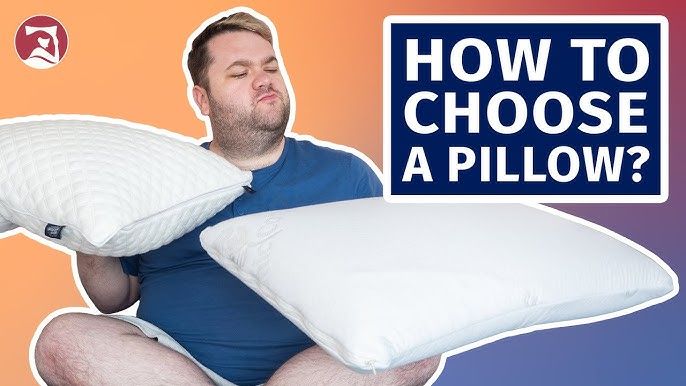
Have you ever woken up at 3 AM with a subtle, nagging ache at the base of your skull? Perhaps you find yourself bunching, folding, or flattening your pillow throughout the night, trying in vain to find a comfortable angle. This common irritation is rarely a sign of a deeper medical issue; instead, it is a mechanical failure of your sleeping environment. When your neck is bent at an unnatural angle for six to eight hours, the muscles along your cervical spine stay tense, depriving you of deep, restorative sleep.
Understanding how to map your sleeping style to the standard pillow firmness scale is crucial to resolving this nightly battle. The scale acts as an objective framework, moving from 1 (extra soft) to 10 (extra firm). A pillow that is too soft allows your head to sink completely to the mattress, hyperextending your neck muscles. A pillow that is too firm props your head up like a textbook, putting strain on your upper trapezius and levator scapulae muscles. Our team at Mind Body Dan believes that fixing this physical misalignment is the first, most important step toward waking up with natural energy.
Selection Criteria: How We Evaluated Neck Support Solutions
When our team evaluated the best neck support solutions, we looked at how each aligns with the pillow firmness scale while considering the following physical and functional standards:
- Material Resilience: Does the material maintain its loft throughout the night, or does it flatten out, leaving your spine unsupported by morning?
- Contouring Ability: How effectively does the pillow adapt to the natural contours of your head and neck to distribute weight evenly?
- Breathability and Heat Regulation: Does the material lock in body heat, causing micro-awakenings due to thermal discomfort?
- Biometric Validation: Can you easily measure the physical impact of the pillow on your sleep structure (such as Deep Sleep duration and nighttime resting heart rate)?
Sleep Hardware & Biometric Tracker Comparison
| Product & Model | Scale Rating (1-10) | Primary Benefit | Ideal For |
|---|---|---|---|
| Contoured Latex Orthopedic Pillow | 7.5 (Medium-Firm) | Consistent physical loft; cradle for the neck | Side & back sleepers seeking high support |
| Customizable Shredded Memory Foam | 4.0 to 8.0 (Adjustable) | Interchangeable loft for custom alignment | Combination sleepers who shift positions |
| Ultra-Slim Down Alternative Pillow | 2.5 (Soft / Low-Loft) | Ultra-thin profile prevents hyperextension | Stomach sleepers requiring a flat angle |
| Herz P1 Smart Ring | N/A (Biometric Sensor) | Tracks Sleep Stages (Deep, REM) & HRV | Those wanting objective proof of sleep recovery |
Detailed Solutions & Recovery Hardware Deep-Dive
1. Contoured Latex Orthopedic Pillow
Constructed from dense, natural latex, this pillow features a molded wave shape with a dual-loft design (one side higher than the other). Unlike memory foam, which responds to body heat and sinks over time, latex has an immediate bounce-back quality. This provides continuous support for your neck, preventing your head from sinking too low as the hours pass.
- Strengths: Durable construction; does not lose loft overnight; excellent airflow due to cellular latex design.
- Weaknesses: Has a rubber-like scent when new; does not mold to the head like memory foam does.
- Ideal User: Side and back sleepers who want dependable, long-term orthopedic support.
2. Customizable Shredded Memory Foam Pillow
This pillow is filled with thousands of individual cross-cut memory foam and microfiber clusters. It comes with an internal zipper, allowing you to add or remove filling to adjust the loft and firmness to your exact preference. This makes it easy to find your perfect spot on the firmness scale.
- Strengths: Fully adjustable; soft yet supportive; easy to customize for your body shape.
- Weaknesses: Removing and storing loose foam can be messy; needs occasional fluffing to restore its loft.
- Ideal User: Combination sleepers who want to experiment with different firmness levels at home.
3. Herz P1 Smart Ring: The Biometric Recovery Partner
Selecting a new pillow from the pillow firmness scale is only half the battle. How do you actually know if your muscle tension is fading and your sleep quality is improving? That is where the **Herz P1 Smart Ring** comes in.
Crafted from lightweight, aerospace-grade titanium, this elegant, screen-free wearable sits comfortably on your finger. It tracks your biometric data without the distracting blue light or buzzing notifications of a traditional smartwatch. The Herz P1 uses medical-grade optical sensors to monitor your Sleep Stages (REM, Deep, Light) and your Heart Rate Variability (HRV). It translates these complex data points into an easy-to-understand daily Recovery Score.
Most modern sleep trackers lock your health data behind monthly paywalls, leaving you with subscription fatigue. The Herz P1 Smart Ring is entirely subscription-free. You buy the ring once, and you own your health data forever. With up to 7 days of battery life, it avoids the constant charging needs of bulky smartwatches, making it easy to wear all night long.
- Strengths: Extremely lightweight titanium; screen-free for better sleep hygiene; detailed HRV and Deep Sleep tracking; no recurring monthly fees.
- Weaknesses: Does not feature an active display screen (designed to be screen-free on purpose to reduce distraction).
- Ideal User: Health-conscious individuals who want to track how changes to their sleep setup affect their recovery, without the bulk of a smartwatch.
A Quick Guide on How to Choose Pillow Firmness
This quick guide will guide you through how to choose pillow firmness that suits your body. Start by identifying your primary sleeping position. Next, measure the distance from the outer tip of your shoulder to your ear. If you have broad shoulders and sleep on your side, you will need a firmer, thicker pillow to fill that gap. If you have a smaller frame or sleep on your back, a medium-soft pillow is usually best to keep your cervical spine in its natural, relaxed position.
How to Choose Pillow Firmness Based on Your Sleeping Position

Your preferred sleeping position is the single most important factor when choosing the right support. When you sleep, your spine should look exactly as it does when you are standing tall with healthy posture. Let’s break down how this relates to different sleep positions and where they fall on the firmness scale.
The Side Sleeper’s Guide
For side sleepers, navigating the pillow firmness scale guidelines requires a focus on filling the gap. Side sleeping leaves a significant space between your ear and the edge of your shoulder. If your pillow is too soft, your head will tilt downward, compressing the nerves on the side of your neck. If it is too firm, your head is pushed upward, straining the opposite side.
Side sleepers should aim for a rating of 6.5 to 8 (Medium-Firm to Firm) on the pillow firmness scale. This firmness level provides enough structure to keep the head level while keeping the ears, shoulders, and hips aligned. A contoured latex or dense memory foam pillow is highly recommended here, as they provide consistent height without collapsing under pressure.
The Back Sleeper’s Guide
Back sleepers require a delicate balance of support and cushioning. Your pillow needs to gently cradle the back of your head while supporting the natural curve of your neck. If the pillow is too firm or tall, it forces your chin down toward your chest, which can restrict your airway and lead to snoring or micro-awakenings.
Back sleepers should look for a rating of 4.5 to 6 (Medium) on the pillow firmness scale. A pillow with a slightly thinner center and a supportive lower border is ideal. This shape keeps your head in a natural position while providing gentle support under your neck, which is why learning how to choose pillow firmness for neck pain can prevent long-term cervical strain.
The Stomach Sleeper’s Guide
Stomach sleeping is the most challenging position for neck health. To breathe while on your stomach, you have to turn your head to one side for hours at a time. If you use a thick, firm pillow in this position, your head is forced backward and upward, putting immense pressure on your lower back and cervical joints.
Stomach sleepers should look for a rating of 1 to 3 (Soft to Medium-Soft) on the pillow firmness scale. The goal is to use the thinnest pillow possible—or even no pillow at all—to keep the spine flat and minimize rotation in the neck. An ultra-thin down or soft down-alternative pillow works best to prevent hyperextending your joints.
Is Your Pillow Stressing Your Nervous System?
Physical discomfort from a poorly fitting pillow can keep your body in a subtle, ongoing state of stress. When you sleep with your neck misaligned, your body stays in a low-level “fight-or-flight” state. This prevents you from entering deep, restorative sleep. Monitoring your physical recovery with a sleek, screen-free tool like the Herz P1 Smart Ring lets you see exactly how changes to your bedding help lower your physical stress levels at night.
Measuring Success: How Your Heart Rate Variability (HRV) and Deep Sleep Stages Reflect Your Pillow Choice

We often make the mistake of relying only on how a pillow feels when we first lay down in a showroom. However, your body’s response over several hours of sleep tells a much more accurate story. True physical recovery is driven by your autonomic nervous system, which you can track through two key metrics: Deep Sleep stages and Heart Rate Variability (HRV).
By establishing your baseline with the pillow firmness scale metrics, you can correlate your physical comfort with your actual biometric data. Deep sleep is the phase of the sleep cycle where your body releases growth hormones, repairs muscle tissues, and clears cellular waste. If your neck is strained or sore, your brain will frequently pull you out of deep sleep into lighter stages of sleep to prompt you to move. You might not remember waking up, but you will feel the effects the next day as brain fog and daytime fatigue.
The Link Between Pillow Comfort and Heart Rate Variability
Heart Rate Variability (HRV) measures the small variations in time between each heartbeat. A high HRV indicates that your autonomic nervous system is relaxed, balanced, and recovered. When your body is dealing with physical strain—like a sore, misaligned neck—your HRV drops because your system is working harder to manage the physical stress.
When you switch to a pillow that matches your ideal spot on the firmness scale, your body no longer has to tense up to protect your neck. As a result, you should see your HRV values rise and stabilize over a few weeks, indicating that your body is getting deeper, more restorative rest.
Why Screen-Free Tracking Helps You Sleep Better
Many people try to track their sleep using traditional smartwatches. However, these devices can often make sleep problems worse. Bulky plastic designs can be uncomfortable to wear, and screens that light up with late-night notifications can disrupt your rest. Plus, having to charge them every day can be a hassle.
The Herz P1 Smart Ring offers a simpler, more comfortable alternative. It is made from smooth titanium and has no screen, so there are no distracting lights or vibrations to wake you up. It works quietly in the background to track your resting heart rate, sleep stages, and recovery trends. This data is delivered directly to your app without any monthly subscription fees, giving you clear insights into your sleep health.
Final Recommendations: Finding Your Perfect Setup
You can create a more restful sleeping environment by aligning your sleep gear with the proper pillow firmness scale values and keeping tabs on your biometrics. Here are our top recommendations for a better night’s rest:
- The Best Overall Bedding Setup: We recommend a high-quality customizable shredded memory foam pillow. It allows you to adjust the firmness and find your perfect loft, whether you sleep on your side, back, or a combination of both.
- The Best Choice for Chronic Neck Stiffess: If you struggle with persistent neck stiffness, the contoured latex orthopedic pillow is an excellent choice. Its resilient, springy design keeps your neck aligned and supported all through the night.
- The Best Tool for Tracking Recovery: To make sure your bedding changes are actually improving your sleep, we highly recommend the Herz P1 Smart Ring. Its lightweight, screen-free titanium design tracks your deep sleep and HRV trends comfortably, without any subscription fees or charging hassle.
Disclaimer: Results may vary depending on individual physical activity levels, unique health conditions, and daily tracking patterns. The information provided in this article is for educational purposes only and should not replace professional medical advice. Always consult with a qualified healthcare provider before making significant changes to your sleep setup, exercise routine, or wellness habits.
