

Are You Waking Up Exhausted? How the STOP BANG Score Can Reveal Your Sleep Apnea Risk
Do you wake up with brain fog, battling 3 AM awakenings and non-restorative sleep? You might be facing undetected airway disruption. Understanding your sleep health starts with the clinical Herz P1 Smart Ring which maps physiological patterns, helping you track vital metrics alongside standard risk-assessment tools.
Take Back Your Sleep.
Take Back Your Life.
- Fall asleep faster & sleep deeper
- Stop waking up in the middle of the night
- Wake up refreshed & full of energy
Key Highlights
- Unmasking Hidden Fatigue: Persistent brain fog and 3 AM awakenings are often physiological red flags for airway resistance rather than simple stress.
- The Power of Screening: The stop bang score is a highly validated, eight-point system designed to assess your level of risk for obstructive sleep apnea.
- Screen-Free Solutions: Modern wearables like the Herz P1 Smart Ring offer an elegant, screen-free method to track sleep stages and cardiovascular metrics without bulky design or annoying charging cycles.
- Data-Informed Actions: Correlating your questionnaire results with continuous nightly biometrics empowers you to make meaningful lifestyle changes.
Demystifying the STOP BANG Score: Your First Step to Restorative Sleep

Quick Answer: Yes, if you are struggling with daily fatigue, calculating your stop bang score is the fastest way to assess your potential risk for obstructive sleep apnea. The short answer is that this test uses eight simple, yes-or-no questions to evaluate risk. However, to choose the right lifestyle adjustments, you must understand how these anatomical and historical questions relate to your real-time physiological recovery trends.
For many of us, the battle with exhaustion starts long before we open our eyes in the morning. You might experience a racing mind as you lay down, only to fall into a shallow, fitful rest interrupted by unexplained 3 AM awakenings. You wake up with a dry mouth and heavy brain fog, reaching immediately for a double espresso just to survive the morning. When this pattern becomes your daily reality, it is easy to assume you are just “stressed.” However, the underlying issue might be physical: a temporary closing of the airway during the night that forces your body out of deep sleep. This is where the stop-bang questionnaire comes in as a vital screening tool.
Table of Contents
Understanding the STOP-BANG Acronym
The stop bang is a highly validated clinical questionnaire. It was developed to help anesthesia providers quickly determine if surgical patients had moderate-to-severe breathing issues before entering surgery, but it has since become a gold-standard screening method for the general public. Every letter in the acronym represents a validated risk indicator:
- S (Snoring): Do you snore loudly? Is your snoring louder than talking or loud enough to be heard through closed doors?
- T (Tiredness): Do you often feel tired, fatigued, or sleepy during the daytime, even after what felt like a full night of rest?
- O (Observed): Has anyone observed you stop breathing, gasping, or choking during your sleep?
- P (Pressure): Do you have or are you being managed for high blood pressure?
- B (BMI): Is your Body Mass Index (BMI) greater than 35 kg/m²?
- A (Age): Are you older than 50 years of age?
- N (Neck): Is your neck circumference greater than 16 inches (40 cm)?
- G (Gender): Are you male?
By assessing these eight physical and behavioral factors, you can get a clear picture of whether your persistent exhaustion warrants deeper investigation. To find out where you stand, calculating your individual stopbang score is straightforward. Each “yes” answer equals one point.
How to Calculate Your Stop Bang Score
Your total score places you in one of three risk categories:
- Low Risk (Score of 0 to 2): Your probability of having moderate-to-severe breathing obstructions is low. Your daytime fatigue may be tied to sleep hygiene, stress, or circadian rhythm disruption.
- Intermediate Risk (Score of 3 to 4): You have a moderate chance of experiencing airway resistance during the night. Lifestyle monitoring and sleep tracking are highly recommended.
- High Risk (Score of 5 to 8): You have a high probability of severe breathing interruptions. It is highly recommended that you take this stop-bang questionnaire result to a qualified healthcare professional for further evaluation.
Let’s look at how the tool is structured. It is designed to be highly sensitive, meaning it is excellent at catching anyone who might have an issue. However, because it is so sensitive, some individuals might score in the intermediate or high range without having a serious clinical condition. This is why tracking your actual physiological patterns over time is so valuable.
When to Use (and When Not to Use) This Tool
The stop bang score is incredibly useful if you are experiencing classic symptoms of airway resistance, such as chronic daytime sleepiness, loud snoring, or waking up gasping. It is also an excellent tool for busy professionals who need a quick, evidence-backed self-assessment to bring to their next doctor’s visit.
However, it should not be used as a standalone diagnostic tool. Only a certified physician can formally diagnose clinical sleep disorders using professional tools like a polysomnography (an overnight sleep study). Furthermore, if you are a young, highly athletic individual who does not fit the typical physical criteria (such as high BMI or older age), but you still suffer from poor sleep quality, the questionnaire might underestimate your risk. For highly active people, anatomical variations or a narrow airway can still cause micro-arousals even with a low stopbang score.
The Screen-Free, Subscription-Free Strategy
If your stop-bang questionnaire indicates intermediate or high risk, or if you simply feel like you are never truly resting, the traditional response is to buy a bulky smartwatch. But let’s be honest: who wants to sleep with a heavy, glowing screen strapped to their wrist, buzzing with emails at 2 AM? Constant notifications only fuel a racing mind, and the chore of charging a watch every single day quickly becomes a nuisance.
Our team at Mind Body Dan recommends a more elegant, screen-free approach: the Herz P1 Smart Ring. Crafted from ultra-lightweight titanium, this ring sits comfortably on your finger, completely out of sight and out of mind. It features medical-grade biometric sensors that quietly monitor your sleep stages (REM, Deep, Light) and your Heart Rate Variability (HRV) while you rest. Best of all, it has no hidden monthly subscription fees—you buy the ring once and own your data forever. It translates complex biometric algorithms into a simple, intuitive daily Recovery Score, helping you see exactly how your airway health impacts your energy levels.
— Team Mind Body Dan
Frequently Asked Questions About the STOP-BANG Questionnaire
Q: How accurate is the stop bang score?
A: Clinical studies show that it is highly accurate as a screening tool. For detecting moderate-to-severe sleep apnea, it has a sensitivity rate exceeding 90%, making it one of the most reliable initial assessments available.
Q: Can women rely entirely on this score?
A: While highly effective, the questionnaire assigns a point to being male, as males historically show higher rates of diagnosed sleep apnea. However, post-menopausal women experience a significant increase in risk, meaning women should pay close attention to other signs like snoring and fatigue, even if their score seems low.
Q: What is the difference between a stopbang score and a sleep study?
A: A questionnaire is a subjective screening tool that helps identify if you are at risk. A sleep study is a objective, medical-grade test that measures brain waves, oxygen levels, and respiratory effort to make an official diagnosis.
Q: Can losing weight improve my score?
A: Yes. Because BMI and neck circumference are key components of the assessment, reducing excess weight can directly lower your physiological risk factors, leading to improved breathing during the night.
Analyzing the Biometrics: Connecting STOP-BANG to Heart Rate Variability and Sleep Stages

When you look closely at your sleep architecture, you begin to see how closely your daytime fatigue relates to nightly physiology. Assessing your stop bang score is highly valuable because it highlights potential structural risk factors. However, the true story unfolds when you look at how these risk factors impact your autonomic nervous system and sleep cycles.
During a normal, restorative night, your body cycles through Light, Deep, and REM sleep. Deep sleep is when tissue repair occurs and growth hormones are released, while REM sleep supports cognitive restoration and emotional processing. However, if your airway is narrow or temporarily obstructed, your body experiences micro-arousals. These are split-second awakenings where your brain realizes it is low on oxygen and signals your body to wake up just enough to clear the airway. You do not remember these moments, but they completely disrupt your sleep cycle. You remain trapped in Light sleep, entirely missing out on the deep, restorative recovery your body needs. This is why you can spend nine hours in bed and still wake up feeling completely drained.
The Role of Heart Rate Variability (HRV)
Another critical biometric affected by nighttime airway resistance is Heart Rate Variability (HRV). HRV is the variation in time between consecutive heartbeats, measured in milliseconds. It is a direct window into your autonomic nervous system:
- High HRV: Indicates that your parasympathetic nervous system (rest-and-digest mode) is dominant. Your body is relaxed, recovering, and managing stress effectively.
- Low HRV: Indicates that your sympathetic nervous system (fight-or-flight mode) is in control. This is common when your body is under physical or mental strain.
When you have a high stop bang risk profile, your body undergoes chronic physical stress during sleep. Every time your airway restricts, your heart rate spikes to push oxygen-depleted blood to your brain. This constant stress response prevents your nervous system from relaxing, resulting in a significantly lower overnight HRV. If you track your HRV and notice it remains consistently low, it is a strong indicator that your body is working too hard to breathe during the night. Linking your stopbang score with a drop in overnight HRV gives you powerful, objective data to discuss with your healthcare provider.
Why Traditional Smartwatches Fail Sleepers
Many of us try to track our physical recovery using standard smartwatches, only to find them uncomfortable to sleep in. The bright screens, heavy casing, and frequent vibrations can actually cause more night-time awakenings. Additionally, having to charge them every single night defeats the purpose of overnight tracking.
The solution? A screen-free, ultra-light titanium ring that tracks your metrics silently, with a battery life that lasts for days.
Beyond the Questionnaire: Building a Holistic, Screen-Free Recovery Strategy
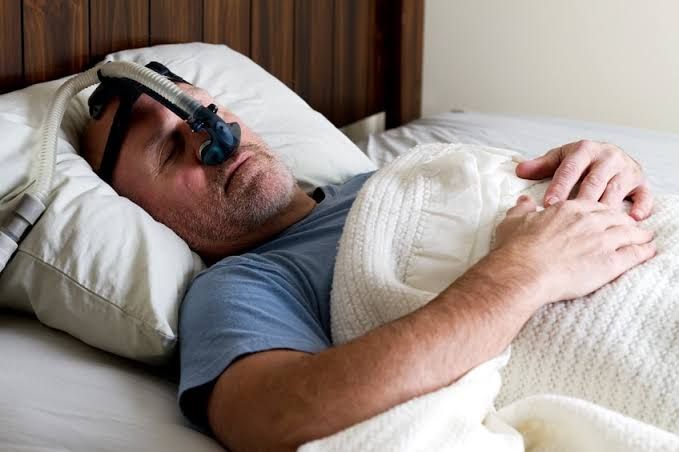
Once you calculate your stop-bang questionnaire results and begin monitoring your overnight biometrics, you can take control of your recovery. If your score is in the low-to-intermediate range, simple, drug-free lifestyle adjustments can dramatically improve your airway health and sleep quality.
First, focus on positional therapy. Sleeping on your back allows gravity to pull your tongue and soft tissues backward, which can narrow your airway. Practicing side-sleeping is one of the easiest ways to keep your airway open. Second, establish a consistent sleep schedule to support your circadian rhythm. Going to bed and waking up at the same time every day stabilizes your hormone levels, making it easier to transition into deep, restorative sleep. Finally, avoid alcohol, heavy meals, and muscle relaxants before bed, as these substances can cause the throat muscles to over-relax, increasing the likelihood of airway resistance.
Tracking Your Progress with the Herz P1 Smart Ring
As you implement these sleep hygiene shifts, tracking how they affect your physiology is crucial. That is where the Herz P1 Smart Ring shines. Instead of overwhelming you with hard-to-read graphs and endless numbers, it synthesizes your heart rate, HRV, sleep stages, and active minutes into a single, easy-to-understand Recovery Score. It lets you see at a glance if side-sleeping is helping you get more deep sleep, or if cutting out late-night snacks is boosting your overnight HRV.
By combining the physical screening power of your stop bang score with the continuous, unobtrusive tracking of a titanium smart ring, you build a complete picture of your recovery. You transition from guessing why you are tired to having clear, actionable insights—all without subscription fees or screen distractions. Reclaiming your mornings, clearing away brain fog, and waking up refreshed is entirely within your reach.
Comparing Your Tracking Options
| Feature | Traditional Smartwatch | Herz P1 Smart Ring |
|---|---|---|
| Comfort | Bulky, heavy, can disrupt sleep | Ultra-light, ergonomic titanium |
| Distraction | Constant screens & vibration alerts | Screen-free, silent tracking |
| Subscription Fees | Often requires monthly payments | Subscription-free (Buy once, own forever) |
| Battery Life | Typically requires daily charging | Multi-day continuous battery |
Your journey to better sleep starts with small, intentional choices. By calculatedly monitoring risk using resources like the stop bang questionnaire and supporting your habits with a comfortable tracker, you can take charge of your wellness. Let’s work together to leave exhaustion behind and reclaim the vibrant, energetic life you deserve.
Disclaimer: Results may vary depending on individual physical activity levels, unique health conditions, and daily tracking patterns. The STOP-BANG questionnaire and smart ring metrics are intended as observational wellness tools to track physiological trends and are not designed to cure, treat, diagnose, or prevent any clinical sleep disorder or medical condition. Always consult with a qualified physician for any health concerns or before starting a new wellness routine.
