

Is Your Exhaustion More Than Just Stress? How to Understand and Use the STOP-BANG Score
Waking up at 3 AM with a racing mind and bone-deep brain fog is more than frustrating; it could indicate underlying sleep disruptions. By calculating your sleep apnea signs risk using the stop-bang score, you can assess vital respiratory risk factors. Tracking continuous biometrics like HRV and deep sleep stages with the screen-free Herz P1 Smart Ring helps you reclaim your nightly recovery without bulky distractions.
Take Back Your Sleep.
Take Back Your Life.
- Fall asleep faster & sleep deeper
- Stop waking up in the middle of the night
- Wake up refreshed & full of energy
Quick Article Guide:
Decoding the STOP-BANG Score: What It Means for Your Nightly Recovery

Quick Answer
It depends. The short answer is that the stop-bang score is a highly validated, eight-question screening tool used to estimate your risk of obstructive sleep apnea (OSA). However, to choose the right path for your recovery, you need to understand how these physical and physiological markers correlate with your actual nightly sleep quality and biometric trends.
Detailed Explanation
We have all been there: tossing and turning, staring at the ceiling during stressful morning brain fog-inducing 3 AM awakenings, and wondering why we feel completely drained. When non-restorative sleep becomes your baseline, it is easy to assume you are just chronically stressed. But often, the issue lies deeper in how you breathe and recover overnight.
The stop-bang score is a specialized screening system designed by anesthesiologists to identify individuals who may have breathing interruptions during sleep. The questionnaire gets its name from an acronym representing eight easy-to-evaluate parameters: Snoring, Tiredness, Observed choking or gasping, high Blood Pressure, Body Mass Index (BMI), Age, Neck circumference, and Gender.
In clinical and wellness settings, the stop-bang questionnaire is standard because of its high sensitivity. Your stop-bang score can pinpoint whether your sleep disruptions are caused by lifestyle factors or physical airway issues. When your airway collapses during sleep, your oxygen saturation drops, triggering a micro-arousal that pulls you out of deep restorative sleep cycles. You might not remember waking up, but your body experiences a cascade of stress hormones that drop your heart rate variability (HRV) and leave you feeling utterly exhausted.
— Team Mind Body Dan Biometric Insights
When to Use This Assessment (and When to Look Deeper)
Using the stop-bang score screening tool is highly recommended if you:
- Experience loud, frequent snoring that disrupts your partner or wakes you up.
- Feel overwhelming daytime tiredness despite spending 8 or more hours in bed.
- Have been told you gasped, choked, or paused breathing during sleep.
- Are managing elevated blood pressure or have a neck circumference over 16 inches.
However, calculating the stop-bang score helps identify respiratory risks, but it is not a complete diagnostic tool on its own. If you score low but still experience non-restorative sleep, your fatigue could stem from poor sleep hygiene practices, high nighttime cognitive load (a racing mind), or disruptions in your natural circadian rhythm.
Suggested Solutions & Screen-Free Bio-Tracking
To reclaim your energy, you must combine simple screening tools with precise, daily tracking. Many people turn to bulky smartwatches to monitor their sleep, but these screens often introduce more sleep-disrupting blue light and anxiety-inducing notifications right before bed.
A screen-free, highly comfortable alternative is the Herz P1 Smart Ring. This titanium-crafted wearable acts as an elegant tracker that works quietly in the background. By continuously tracking your heart rate, HRV, and sleep stages (REM, Deep, and Light), it turns complex physiological data into a single, highly actionable Recovery Score. Best of all, it operates on a subscription-free model, so you own your biometric data forever without hidden monthly costs. It lets you monitor how your physical recovery aligns with your daily habits, helping you bridge the gap between screening and true rest.
Why Screen-Free Tracking is Essential for Sleep:
Exposing your eyes to notifications, vibrations, and blue-lit screens at 3 AM keeps your mind racing. Relying on a sleek, screen-free wearable like a smart ring allows you to collect highly accurate sleep stage and HRV biometrics without the temptation of checking your phone. Your personalized stop-bang score acts as a baseline, and your daily recovery metrics show you the real-time progress of your sleep improvements.
Short FAQ on the STOP-BANG Score
Q1: What does a high stop-bang score mean?
A1: A high stop-bang score indicates a elevated risk of moderate-to-severe obstructive sleep apnea. It suggests you should monitor your sleep quality closely and consider speaking with a professional for a formal sleep study.
Q2: Can my stop-bang score change over time?
A2: Yes, your stop-bang score can improve if you make positive lifestyle modifications, such as managing your weight (which lowers your BMI) or focusing on physical conditioning to optimize airway health.
Q3: Is the stop-bang questionnaire accurate for everyone?
A3: Yes, the stop-bang questionnaire is highly reliable as a screening tool across various demographics, though it is particularly sensitive in identifying risks for middle-aged and older adults.
Q4: How do I calculate my personal stopbang score?
A4: You simply answer “yes” or “no” to the eight questions. Each “yes” contributes one point to your total score, which ranges from 0 to 8.
Clinical Interpretation of the STOP-BANG Questionnaire

To get the most out of your stop bang screening, it is vital to break down how points are allocated and what each tier of risk indicates. Using the stop-bang questionnaire in clinical settings allows healthcare providers to quickly prioritize patients who require sleep studies. For us, it serves as a highly practical guide to help explain why we feel tired even after what seemed like a full night of rest.
The stop-bang score is calculated by giving one point for every affirmative response to the following criteria:
| Letter | Symptom / Metric | Specific Screening Criteria |
|---|---|---|
| S | Snoring | Do you snore loudly (louder than talking or loud enough to be heard through closed doors)? |
| T | Tired | Do you often feel tired, fatigued, or sleepy during the daytime? |
| O | Observed | Has anyone observed you stop breathing or choking/gasping during your sleep? |
| P | Pressure | Do you have or are you being treated for high blood pressure? |
| B | BMI | Is your Body Mass Index (BMI) greater than 35 kg/m²? |
| A | Age | Are you older than 50 years of age? |
| N | Neck | Is your neck circumference greater than 16 inches (40 cm)? |
| G | Gender | Are you male? |
Your total stop-bang score categorizes you into one of three risk tiers for obstructive sleep apnea:
- Low Risk (0 to 2 points): Your probability of having moderate-to-severe airway collapse during sleep is low. If you are experiencing fatigue, look into lifestyle variables or track your circadian timing.
- Intermediate Risk (3 to 4 points): An intermediate stop-bang score (3 to 4 points) indicates a moderate risk. At this level, tracking your daily physiological responses becomes critical to observe trends over time.
- High Risk (5 to 8 points): A high stop-bang score (5 to 8 points) means you are highly likely to have sleep-disordered breathing. We recommend discussing your results on the stop-bang questionnaire with a sleep specialist.
Why does the stop-bang score include neck circumference and gender? The physiological explanation is simple: larger neck circumferences put extra weight on the upper airway when throat muscles relax during sleep, increasing the risk of airway blockage. Similarly, male anatomy and fat distribution patterns tend to make airways slightly more susceptible to collapse under deep muscle relaxation.
Understanding your stop-bang score is key because it helps you contextualize your nightly biometrics. If you fall into the intermediate-to-high risk categories, you are highly likely to experience frequent micro-arousals during your sleep cycles. These micro-awakenings prevent you from reaching deep, restorative sleep cycles, which are essential for cellular repair and mental clarity. By monitoring your stop-bang score risk factors alongside daily biometrics, you can build a highly accurate, long-term picture of your personal sleep health.
Curious about your sleep quality?
Analyzing stop bang results is a highly useful first step, but sleep architecture is complex. Combining static risk scores with lightweight, passive bio-monitoring can help you spot physical recovery issues before they turn into chronic fatigue.
How Bio-Tracking Bridges the Gap Between Screening and Deep Sleep
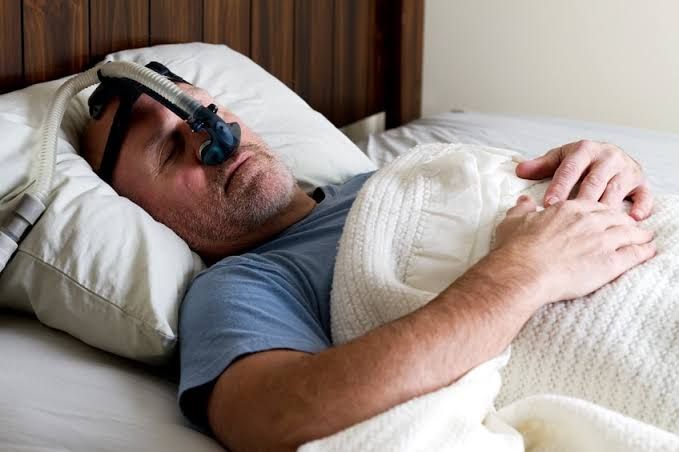
Once you understand how the stop-bang questionnaire evaluates static risk factors, the next step is active, continuous lifestyle management. If you have an elevated stop-bang score, tracking your real-time biometrics can show you exactly how these physical variables impact your daily body battery.
While a stop-bang score evaluates static risk factors, your body’s recovery is highly dynamic. Factors like late-night meals, alcohol intake, and bedtime screen habits can heavily affect your sleep architecture. When you consume caffeine late in the day or look at highly stimulating content on your phone, you disrupt your natural circadian rhythm. This raises your resting heart rate and lowers your overnight heart rate variability (HRV), preventing you from getting enough deep and REM sleep.
To optimize your sleep, consider adopting these key lifestyle adjustments:
- Keep your bedroom cool and dark: A cooler environment encourages your body to drop its core temperature, which is a key signal for entering deep, restorative sleep.
- Unplug 1 hour before bed: Create a transition buffer by replacing your phone screen with a book, stretching, or light meditation.
- Track sleep indicators passively: Use highly accurate, comfortable wearable biometric technology to observe how these adjustments impact your nightly recovery.
For many, standard smartwatches make these adjustments difficult. Their bulky form factor, bright screens, and daily charging needs disrupt sleep hygiene. This is why the elegant, screen-free titanium design of the Herz P1 Smart Ring is so beneficial. It fits comfortably on your finger, tracking heart rate, sleep stages, and active recovery trends without any bright screens or daily battery stress.
Beyond the stop-bang score, we need to analyze how well our autonomic nervous system bounces back overnight. Our heart rate variability (HRV) is a direct window into this system. When your airway collapses or you wake up with a racing mind, your sympathetic nervous system (“fight-or-flight”) stays active, causing your HRV to drop.
By monitoring your biometrics with the Herz P1 Smart Ring, you can easily track these trends. It calculates an intuitive Daily Recovery Score, helping you see whether your body is actually getting rest. If you are looking to reclaim your physical and mental energy without the stress of a subscription-heavy, distraction-filled device, this titanium smart ring is an ideal wellness companion.
Pairing your stop-bang score with biometric monitoring helps you make highly informed, data-driven wellness choices. You can easily see whether eating dinner earlier, sleeping on your side, or cutting out late-night screen time directly improves your deep sleep stages. By understanding stop bang risk metrics and tracking your recovery, you can make the necessary adjustments to wake up feeling genuinely refreshed and full of energy every single day.
Deep Sleep Insight:
Calculating your stop-bang score provides a reliable indicator of potential airway risks, but optimizing your overall sleep environment is equally vital. Focusing on a screen-free wind-down routine helps keep your body’s nervous system calm, laying the foundation for consistent, deep sleep optimization guide habits and highly restorative nights.
Disclaimer: Results may vary depending on individual physical activity levels, unique health conditions, and daily tracking patterns. The STOP-BANG score and smart ring biometric indicators are designed exclusively for general fitness and wellness monitoring purposes and are not intended to diagnose, treat, or cure any medical condition. Always consult a qualified medical professional if you suspect you have sleep apnea or other respiratory health concerns.
