

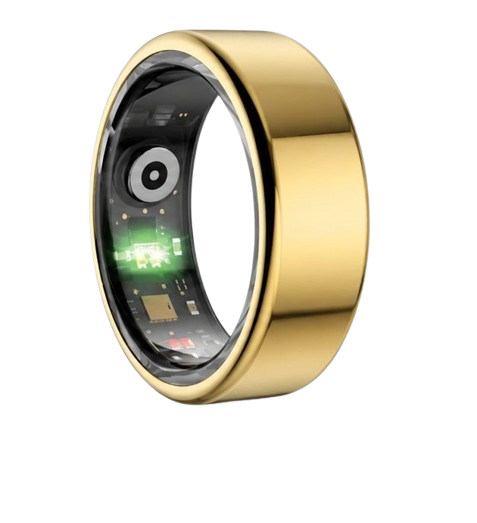
Are you wondering, can you use natural cycles with an iud safely to track your body’s daily hormonal rhythms without compromising your health? Many women feel overwhelmed by the conflicting advice online regarding fertility awareness methods and intrauterine devices. Here at Team Herz P1, we understand that decoding your physical baseline should be simple, accurate, and completely stress-free. That is why we designed the premium, subscription-free Herz P1 smart ring to help you map sleep architecture, heart rate variability, and delicate skin temperature changes without unnecessary hassles.
Built to Last. Save Up to 69% Today.
The Herz P1 Smart Ring tracks HRV, Sleep, Heart Rate & SpO2 around the clock. No subscriptions. No renewals. Ever.
In This Article
- Understanding the safety and functional limits of natural cycle tracking while using an active IUD.
- How different categories of intrauterine devices alter your daily basal body temperature trends.
- Decoding the biometric differences between hormonal and non-hormonal copper intrauterine devices.
- Using the subscription-free Herz P1 Smart Ring to seamlessly monitor your overall cycle health.
Can You Use Natural Cycles With an IUD Safely? The Clinical Reality

You might wonder what happens when you combine an active intrauterine device with a digital fertility tracker.
Specifically, many women look to the natural cycles contraception app to understand their body’s underlying ovulatory signs.
This intersection primarily affects people who want the reliable birth control of an IUD but still desire the self-knowledge of tracking their natural biological rhythms.
You may want to pinpoint your physical trends to better predict your daily energy levels, mood shifts, and sleep patterns.
This tracking process occurs entirely on your digital device through temperature changes reflected on your skin.
Tracking matters most when you are transitioning off synthetic hormones or trying to figure out if your body still cycles naturally with a localized device.
The process works by reading subtle changes in your basal body temperature, which typically rises by 0.3°C to 0.5°C after ovulation occurs.
Clinical statistics show that an IUD provides over 99% contraceptive effectiveness on its own.
Because of this high baseline, adding a digital tracker will not make your birth control more effective, but it offers rich biological data.
If you use a hormonal IUD like Mirena or Kyleena, the synthetic progestin may suppress ovulation completely in up to 85% of cycles during the first year of use.
This means your temperature charts might appear flat, making standard algorithms unable to locate an ovulatory window.
Alternatively, if you have a non-hormonal copper IUD, your natural cycle remains completely intact because copper simply deters sperm without altering your hormones.
For those with a copper IUD, tracking temperature allows you to easily map your monthly biological peaks and valleys.
Understanding these nuances helps you avoid frustration when looking at confusing app dashboards.
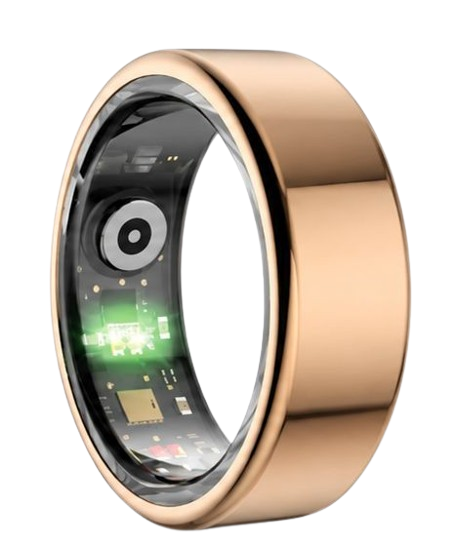
If you want to track this in real time, the Herz P1 Smart Ring monitors your skin temperature and wellness metrics 24/7 — explore it here.
How Hormonal and Non-Hormonal IUDs Interact with Natural Temperature Tracking

To understand how tracking works with an intrauterine device, we must look closely at female reproductive endocrinology.
When you use a natural birth control app, the software relies heavily on detecting the biphasic temperature shift.
This biphasic pattern consists of a cooler follicular phase followed by a warmer luteal phase.
The rise in temperature is caused by the hormone progesterone, which is released by the corpus luteum after an egg is successfully discharged.
If you are trying to use natural cycles with a hormonal IUD, this biological signal is often altered.
Hormonal IUDs slowly release levonorgestrel directly into the uterine cavity.
This synthetic hormone primarily acts by thickening your cervical mucus to prevent sperm from entering.
It also thins your endometrial lining to prevent implantation.
Although the hormone is mostly localized, a small amount enters your systemic circulation.
For many individuals, this systemic dose is high enough to suppress the hypothalamic-pituitary-ovarian axis.
Consequently, your ovaries may not mature and release an egg each month.
Without ovulation, your body does not produce the surge of progesterone needed to raise your core temperature.
Your daily thermal chart will likely appear erratic or flat.
Therefore, utilizing a smartphone app for nc birth control algorithms with a hormonal IUD is technically safe, but practically redundant.
The app will likely struggle to identify distinct green or red days because your natural thermal markers are absent.
On the other hand, a copper IUD does not use any synthetic hormones.
It releases copper ions that are toxic to sperm, leaving your underlying hormonal cycle completely untouched.
This means your body still ovulates, produces progesterone, and exhibits the classic biphasic temperature curve.
Thus, copper IUD users can seamlessly combine their physical device with digital trackers.
According to clinical studies on cycle tracking, having a reliable tool to read these daily thermal variations is critical for accurate data.
We must emphasize that using any tracking software while on a highly effective birth control device like an IUD is purely for wellness insights.
It is not meant to replace or enhance the contraceptive properties of your IUD.
It is a wonderful way to learn about your personal baseline.
Decoding the Biometric Signals: Why Dual Tracking Overcomes IUD Data Gaps

When your natural hormonal rhythms are altered by an IUD, traditional temperature tracking alone can leave gaps in your health data.
That is why advanced biometric trackers look at multiple physiological markers at the same time.
Utilizing a high-quality female cycle app alongside a multispectral smart ring offers a complete picture of your health.
A smart ring does not just measure temperature; it also tracks heart rate variability, or HRV.
HRV is the measure of the time variation between each heartbeat.
The American Heart Association notes that HRV is a highly sensitive indicator of autonomic nervous system stress.
During your natural cycle, your resting heart rate and HRV naturally fluctuate.
Typically, resting heart rate rises and HRV falls during the luteal phase due to increased sympathetic nervous system activity.
If you have a hormonal IUD that suppresses ovulation, you might not see these classic luteal shifts.
However, you will still see fluctuations caused by daily life, work stress, and sleep quality.
By monitoring these trends, you can understand how your body reacts to daily stressors even without a regular menstrual cycle.
Furthermore, optical sensors in smart rings measure blood oxygen saturation, or SpO2.
According to the National Sleep Foundation, healthy oxygen levels are vital for restorative sleep.
Our team has found that tracking these dual metrics helps you manage your physical energy more effectively.
By viewing your heart rate, HRV, and sleep stages together, you can optimize your recovery.
You can see exactly how a poor night of sleep affects your cardiovascular strain the next day.
This comprehensive approach ensures that you are never relying on a single, potentially distorted temperature reading.
It allows you to build a highly personalized wellness profile.
This is especially helpful if your IUD makes your periods light, irregular, or completely absent.
You still get valuable feedback about your metabolic and cardiovascular health every single day.
A Step-by-Step Guide to Cycle Tracking with an IUD
Successfully tracking your wellness trends while using an IUD requires a consistent daily routine.
First, you need to choose a reliable period tracker for birth control that fits your specific device type.
If you have a copper IUD, set the app to track your natural fertility signs and temperature changes.
If you have a hormonal IUD, configure the app to focus primarily on symptom logging and general wellness trends.
Second, you must select an accurate cycle tracking device to collect your biometric data.
Unlike traditional thermometers that require manual readings the moment you wake up, a smart ring works continuously in the background.
Wear the ring on your finger consistently every night to establish a solid baseline.
The ring will monitor your skin temperature fluctuations during your deepest sleep cycles.
This overnight data is much more stable than spot-check morning readings.
Third, sync your smart ring with its companion mobile application every morning.
Review your daily readiness score, sleep quality breakdown, and resting heart rate.
Pay close attention to your heart rate variability trends over a 30-day period.
If you notice your HRV dropping consistently, it may indicate that your body needs extra rest.
Fourth, log any subjective symptoms such as cramping, spotting, or mood changes in your app.
Hormonal IUDs often cause random spotting, especially during the first three to six months after insertion.
Keeping a detailed log helps you differentiate between standard cycle phases and typical IUD side effects.
Fifth, use these combined insights to plan your weekly physical activities.
On days when your readiness score is high, you can engage in high-intensity workouts safely.
On days when your data shows high physical stress, prioritize gentle recovery and early sleep.
This proactive approach helps you work with your body instead of against it.
Pitfalls of Cycle Tracking: Subscriptions, Bulky Watches, and Data Inaccuracies
Many people make critical mistakes when they begin their physical tracking journey.
The first major pitfall is choosing a bulky smartwatch to track overnight biometrics.
Large smartwatches are often uncomfortable to wear to bed and can disrupt your sleep architecture.
Furthermore, if the watch shifts on your wrist during the night, the optical sensors lose contact with your skin.
This leads to highly inaccurate heart rate and temperature readings.
A lightweight, low-profile smart ring provides much more consistent sensor contact.
The second mistake is falling into the trap of ongoing monthly subscription fees.
Many wearable brands require you to pay a high upfront cost and then charge a recurring fee just to access your own data.
Over a few years, these hidden fees can add up to hundreds of extra dollars.
We believe that you should own your health data completely without any ongoing financial barriers.
That is why the Herz P1 companion app is completely free for life with zero subscriptions.
The third mistake is using an inappropriate tool for your specific contraception method.
If you rely solely on a standard calendar-based app without sensor data, your predictions will be highly inaccurate.
This is especially true if your IUD makes your bleeding patterns irregular.
An advanced ovulation ring tracker solves this by relying on actual physiological inputs instead of simple calendar math.
It reads your unique physical signatures to deliver accurate, personalized feedback.
The fourth mistake is ignoring the importance of device durability.
Cheap plastic trackers can easily crack, scratch, or fail when exposed to water.
You need a device that can withstand daily handwashing, showers, and intense workouts.
Our team built the Herz P1 with military-grade steel and an IP68 waterproof rating to ensure it survives any environment.
This level of durability gives you peace of mind as you track your health daily.
Choosing the Right Health Tracker: A Head-to-Head Comparison
Selecting the perfect wearable device is a personal decision that depends on your unique lifestyle and goals.
To help you make an informed choice, our team compiled this direct comparison of the leading tracking options on the market.
This data highlights key areas such as sensor accuracy, battery life, warranties, and long-term costs.
| Feature | Herz P1 Smart Ring | Standard Smartwatch | Subscription Ring |
|---|---|---|---|
| Monthly Fees | $0 (Free App Forever) | Varies ($0 to $10/mo) | $5.99 to $9.99/month |
| Warranty | 2-Year Warranty | 1-Year Standard | 1-Year Standard |
| Waterproof Rating | IP68 (Up to 164 feet) | IP67 or IP68 (Varies) | IP68 Standard |
| Battery Life | 6 Days (Fast Charge) | 1 to 2 Days (Requires Daily Charge) | 4 to 5 Days |
| Material | Military-Grade Steel | Aluminum or Plastic | Titanium Alloy |
As you can see, our smart ring offers premium materials and a longer battery life without any monthly subscription costs.
This ensures a much lower total cost of ownership over a two-year period.
Additionally, the two-year warranty guarantees that your investment is fully protected.
Frequently Asked Questions About Smart Rings and Cycle Tracking
Is Herz P1 waterproof?
Yes, the Herz P1 is fully IP68 waterproof up to 164 feet.
This military-grade waterproof protection means you can wear the ring while swimming, showering, or washing your hands.
You do not need to take it off during your daily routines, ensuring continuous tracking.
How long does the battery last?
The high-capacity battery in the Herz P1 lasts up to 6 days on a single charge.
It charges exceptionally fast, reaching a full charge in under 1 hour.
This quick-charging capability ensures that you rarely miss a single minute of biometric tracking.
Which finger is best to wear it on?
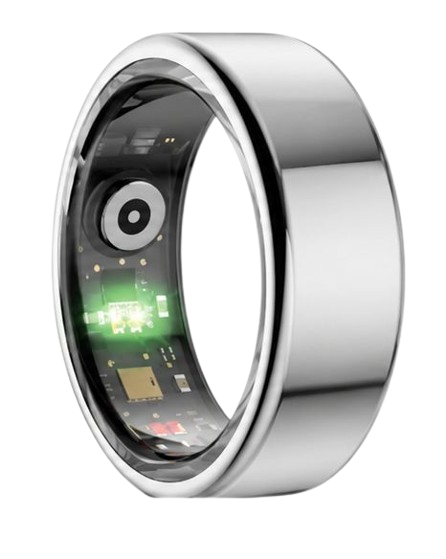
For the most accurate sensor readings, we recommend wearing the smart ring on your index, middle, or ring finger.
Ensure the inner sensor bumps sit snugly against the palm side of your finger base.
This snug fit allows the optical sensors to read your blood vessels clearly and continuously.
Does it store data offline?
Yes, the Herz P1 can store up to 7 days of health data locally on the ring itself.
This means you can travel or sleep without your smartphone nearby.
Once you open the app, your stored data will automatically sync and update your trends in seconds.
90-Day 100% Money-Back Guarantee
“The Herz Smart Ring helps me manage stress easily. It’s accurate, stylish, and lightweight—perfect for my busy life!”
— Jennifer P. | ✔ Verified Customer
- ✓ 6-Day Battery Life
- ✓ Detailed Sleep Analysis
- ✓ Fast 1-Hour Charging
- ✓ iOS & Android Ready
Questions? Call: 1-866-479-1629
Conclusion
Ready to monitor your health every day? Explore the Herz P1 Smart Ring and see if it fits your lifestyle. Call: **1-866-479-1629** — our team can help you advise on the correct ring size and set personalized health goals.
Note: Individual results may vary depending on individual health conditions, age, and lifestyle habits. This article is intended for general health reference purposes only.
