

Loom and Leaf Memory Foam Mattress Review: Elevating Sleep Comfort and Recovery Science
Are you waking up stiff, wrestling with non-restorative sleep, or struggling to find deep rest? In this expert review, we dissect how the loom and leaf memory foam mattress supports physical recovery. We’ll also show how pairing physical alignment with a screen-free smart tracking solution unlocks true rejuvenation.
Take Back Your Sleep.
Take Back Your Life.
- Fall asleep faster & sleep deeper
- Stop waking up in the middle of the night
- Wake up refreshed & full of energy
Key Article Highlights
- Premium Construction: Discover how high-density memory foam provides orthopedic-grade spinal alignment.
- Spinal Decompression: Learn how targeted lumbar zoning relieves lower back pain and joint pressure.
- Cooling Technology: Explore the gel-infused foam design built to combat memory foam’s traditional heat-trapping tendencies.
- The Missing Recovery Link: Understand why even the finest mattress cannot track or improve your daily sleep stages and heart rate variability (HRV).
The Ultimate Loom and Leaf Mattress Review: Sleep Science & Ergonomic Comfort
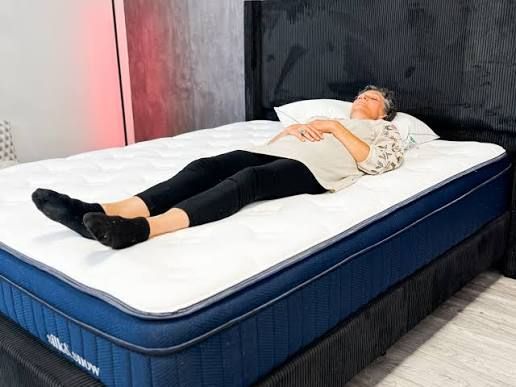
Table of Contents
Quick Summary & Ratings Table
To help you evaluate whether this ultra-premium bed aligns with your wellness goals, we have summarized its core performance features based on strict orthopedic and materials science testing criteria.
| Testing Criterion | Score (Out of 10) | Expert Assessment |
|---|---|---|
| Pressure Relief | 9.2 / 10 | Exceptional contouring around the hips, shoulders, and lower lumbar. |
| Motion Isolation | 9.5 / 10 | Zero motion transfer; ideal for light sleepers sharing a bed. |
| Edge Support | 8.4 / 10 | Stronger than standard foam beds, thanks to high-density foam encasement. |
| Temperature Regulation | 8.1 / 10 | Solid cooling gel integration, though naturally warmer than hybrid coil beds. |
Best For: Back and side sleepers seeking deep, orthopedic pressure relief; individuals struggling with joint stiffness; and couples who require exceptional motion isolation to prevent waking each other up at night.
Loom and Leaf Product Overview
When we look at the luxury sleep market, choosing a loom and leaf model is often considered the benchmark for premium all-foam design. Manufactured by Saatva, this mattress bypasses the low-cost trends of roll-packed beds in favor of white-glove delivery, arriving fully expanded and ready for sleep. This loom leaf mattress review highlights how the brand sets out to challenge temporary, cheap foam configurations by providing medical-grade material density designed for lasting physical recovery.
At its core, the mattress focuses on structural integrity. Unlike typical mattresses that sag within a few years, the multi-layered build of the loom and leaf utilizes thick, eco-conscious foam layers to distribute body weight evenly across the entire surface. We often talk about establishing a solid baseline for physical comfort, and this mattress aims to do exactly that by cradling your joints while holding the spine in a biologically neutral alignment.
Key Highlights & Material Science
To truly understand what makes this bed different, we have to look beneath the organic cotton cover. Our team conducted our comprehensive loom and leaf evaluation by dissecting each physical layer to see how it aids muscle and skeletal recovery:
- Breathable Organic Cotton Cover: The mattress is wrapped in a naturally hypoallergenic organic cotton cover, quilted with a natural thistle flame barrier. This ensures a cool-to-the-touch sleep surface that avoids synthetic chemical off-gassing.
- Spinal Zone Cooling Gel Layer: Beneath the cover lies a proprietary gel-infused memory foam panel. This layer targets the center third of the bed, combining spinal support with active heat-dissipation to prevent the deep “sweating” typical of cheap foams.
- 5-lb. Eco-Friendly Memory Foam: This high-density layer offers the classic contouring “hug” of high-grade memory foam. It responds gradually to your body heat, contouring around your physical pressure points without letting you sink so deep that you feel trapped.
- Transition & Support Core: A multi-layered high-density foam foundation provides the structural counter-pressure necessary to keep your lower back from bowing inward, ensuring deep physical decompression.
Real-World Experience & Sleeping Positions
A mattress might look beautiful on paper, but how does it behave under real-world conditions? When you rest on a Loom and Leaf memory foam mattress, the sensation is balanced. It does not feel like a soft, quicksand-like foam; instead, it delivers a sturdy, therapeutic contour. Let’s break down how this mattress feels across different sleep styles:
For Side Sleepers
Side sleeping places immense pressure on your shoulders and hip bones. On the loom and leaf, the 5-lb high-density memory foam allows these sensitive areas to sink in just enough to keep the spine straight. This eliminates the morning hip aches that occur on beds that are too firm.
For Back Sleepers
Back sleepers require targeted lumbar support to prevent the pelvis from sinking too low. The reinforced center zone of the loom and leaf keeps the lower back perfectly cradled. This minimizes muscle tension, allowing back muscles to fully relax after a long day.
For Stomach Sleepers
If you sleep on your stomach, you need a firm surface to prevent your lower back from arching into an unnatural curve. While the loom and leaf “Relaxed Firm” option works well for average-weight individuals, heavier stomach sleepers might find their pelvis sinking slightly too deep, making the “Firm” configuration a safer bet.
Honest Pros & Cons
At Mind Body Dan, our goal is absolute transparency. We believe every piece of sleep gear has trade-offs, and this loom and leaf review is no exception. Let us weigh the benefits and potential drawbacks of choosing this mattress.
Pros & Cons Breakdown
The Pros:
- Premium orthopedic support from multi-density, high-grade memory foam layers.
- Excellent motion isolation that completely dampens movement across the bed.
- Eco-friendly construction featuring certified foams and organic cotton covers.
- Free white-glove home delivery and mattress setup, avoiding awkward bed-in-a-box struggles.
The Cons:
- Higher upfront price compared to budget foam beds.
- Lacks the springy “bounce” that some sleeper profiles prefer for easier mobility.
- Can retain slight warmth for exceptionally hot sleepers, as is common with all-foam builds.
How Loom and Leaf Compares to Standard All-Foam Beds
Most standard memory foam beds are compressed into a box and shipped to your doorstep. While convenient, this compression process requires the use of less dense, more breakable foam compounds. Because the premium loom and leaf construction does not rely on compression, it can use dense, heavy 5-lb. foams. This delivers superior, long-term support and eliminates the sag commonly seen in compressed mattresses after only a few years of regular use.
Who Is This Mattress Best For?
We highly recommend checking out the different Loom and Leaf mattress options if you are an active individual, an office worker sitting for long hours, or a senior looking to manage morning aches and joint pains. However, if your budget is highly constrained, or if you prefer the deep, bouncy spring feel of a traditional innerspring mattress, this premium all-foam model might not be your perfect match.
The Mind Body Dan Verdict on Loom and Leaf
In our detailed loom leaf mattress review, we conclude that this bed stands tall as a premier physical investment in your sleep hygiene. It effectively minimizes the physical roadblocks to recovery, such as tossing and turning or joint soreness. However, even with the ultimate luxury sleep setup, you might still wake up feeling tired, unfocused, and mentally drained. In the next section, we’ll explore the science-backed reason why your bed is only half of the physical recovery equation.
Beyond the Bed: Why Your Mattress Is Only Half the Recovery Equation
“True recovery is not merely a physical state of immobility; it is a highly active neurological and cardiovascular synchronization process.”
Think about a night when you laid down on an incredibly comfortable, plush bed, yet your mind kept racing. Perhaps you experienced those agonizing 3 AM awakenings—staring at the ceiling with a racing mind, completely unable to drift back off. You wake up with profound brain fog, desperately relying on caffeine just to force yourself through the workday. This frustrating cycle of non-restorative sleep points to a crucial knowledge gap: physical support is merely one piece of the puzzle.
Sleep consists of complex, distinct biological cycles. To rebuild muscle tissues, balance hormones, and clear cellular waste from the brain, your body must spend adequate time in deep sleep and REM (Rapid Eye Movement) stages. When your autonomic nervous system (ANS) is stuck in a chronic stress loop (fight-or-flight), you remain trapped in light sleep, regardless of how supportive your mattress is. While your mattress provides the physical foundation for alignment, it cannot monitor or manage your internal biological stress response.
This is why we must balance physical comfort with biological tracking. Without checking how your body actually responds to your lifestyle, diet, and habits, you are essentially flying blind. Evaluating your recovery requires keeping a close eye on your Heart Rate Variability (HRV) and sleep architecture—translating invisible physiological signals into simple, actionable daily metrics.
Bridging the Gap: Elevating Your Sleep Architecture with Screen-Free Tracking

Meet the Herz P1 Smart Ring
A premium, ultra-lightweight titanium wearable designed for deep sleep optimization. No screens, no annoying monthly subscription fees—just elegant, medical-grade biometric science wrapped comfortably around your finger.
So, how do we track these biological cycles without adding the stressful distraction of more screens in the bedroom? Traditional smartwatches are bulky to sleep in, require daily charging, and blast you with blue light and notifications that spark bedtime anxiety. The Herz P1 Smart Ring solves these issues with an ultra-lightweight, hypoallergenic titanium ring that monitors your body silently and continuously.
By using advanced medical-grade photoplethysmography (PPG) sensors positioned right against the highly vascular skin of your finger, the Herz P1 tracks key recovery biomarkers with stunning accuracy. Best of all, it offers a refreshing subscription-free model—you buy the ring once and own all your health data forever, avoiding the monthly subscription fatigue that plagues modern tech.
Demystifying Biometric Recovery: HRV & Sleep Stages
To help you make sense of your data, the Herz P1 Smart Ring translates complex physiological metrics into a simple, daily Recovery Score. Here is how it monitors your internal systems while you sleep:
- Heart Rate Variability (HRV): HRV measures the microscopic timing variations between each consecutive heartbeat. This metric serves as a direct window into your autonomic nervous system. A high HRV indicates your nervous system is relaxed, resilient, and ready to take on the day. A low HRV points to underlying physiological stress—signaling that your body is still busy recovering, even if you stayed in bed for a full eight hours.
- Sleep Stage Tracking (Light, Deep, REM): The ring’s smart algorithms identify when you drift between different sleep stages. This allows you to check whether simple habit changes, like cutting out evening screens or avoiding late meals, are actually increasing your restorative deep sleep.
- Daily Activity Alignment: By cross-referencing your sleep metrics with your daily movement, the Herz P1 calculates a balanced Recovery Score, helping you decide whether to push through a tough workout or prioritize rest.
By pairing the luxurious, posture-aligning physical comfort of a premium mattress with the screen-free bio-insights of the Herz P1 Smart Ring, you build a complete recovery ecosystem. While your mattress provides the physical foundation, the smart ring visually proves how well your recovery strategies are actually working.
Disclaimer: Results may vary depending on individual physical activity levels, unique health conditions, and daily tracking patterns. This article is for informational purposes only and does not substitute for professional medical advice, diagnosis, or treatment. Always consult with a qualified healthcare provider regarding any wellness or biometric trends.
