

How to Fall Asleep Fast and Sleep Better Tonight
Tired of staring at the ceiling with a racing mind? Knowing how to fall asleep fast is not about luck; it is about biology. Learn the science of deep recovery and discover how tracking your biometrics with our favorite screen-free Herz P1 Smart Ring transforms your sleep quality tonight.
Take Back Your Sleep.
Take Back Your Life.
- Fall asleep faster & sleep deeper
- Stop waking up in the middle of the night
- Wake up refreshed & full of energy
What You Will Learn in This Guide
- The Science of Drifting Off: How brainwaves, melatonin, and core body temperature interact.
- Step-by-Step Wind Down: A practical system to transition your body from high alert to deep rest.
- Immediate Relaxation Techniques: Clinical breathing and cognitive exercises to quiet a racing mind.
- Environment Optimization: Practical habits to transform your bedroom into a sleep sanctuary.
- Data-Informed Sleep Tracking: How screen-free biometric monitoring helps you build sustainable habits.
The Science of Rest: Preparing Your Biology to Drift Off

Do you know that feeling of lying awake at 3 AM, listening to the ticking clock while your mind replays your entire to-do list? It is a frustrating, draining experience. Many of us struggle with how to fall asleep fast because we treat sleep like an on-off switch. We expect our brains to instantly shift from high-stress work mode to deep, tranquil recovery. In reality, biological sleep is a gradual, highly coordinated transition governed by your nervous system and hormonal signals.
To master how to fall asleep quickly, you first need to understand the physiological prerequisites. Your body relies on two primary drivers to regulate rest: adenosine build-up (often called sleep pressure) and your circadian rhythm (your internal biological clock). During the day, awake time naturally builds up adenosine in your brain. When night falls, your circadian rhythm signals the pineal gland to release melatonin, the hormone responsible for cooling your body temperature and slowing your heart rate. If you are constantly exposed to stimulating environments, blue screens, or emotional stress late at night, this critical hormonal surge is delayed, leaving you feeling “tired but wired.”
Prerequisites: What Your Body Needs Before You Lie Down
Before executing any tactical exercises to fall asleep, certain environmental and physiological baselines must be established. If you ignore these fundamentals, even the most advanced breathing techniques will feel like swimming upstream.
- Sufficient Adenosine Accumulation: You must build adequate sleep pressure during the day by staying physically active and avoiding long, late-afternoon naps.
- A Downregulated Nervous System: Your body cannot transition into restorative sleep stages while operating under sympathetic (“fight-or-flight”) dominance. You must consciously guide your body into parasympathetic (“rest-and-digest”) dominance.
- Optimal Core Temperature: Your internal body temperature must drop by about 2°F (1°C) to initiate high-quality rest.
- Accurate Personal Baseline Data: Understanding how your body reacts to daily stressors requires monitoring your resting heart rate and Heart Rate Variability (HRV). This is where utilizing advanced, screen-free smart ring biometrics becomes incredibly valuable.
Step-by-Step Wind-Down Execution Guide
If you want to master how to go to sleep fast, you need a repeatable nightly routine. This step-by-step framework helps lower your heart rate, clear your mind, and prepare your nervous system for deep sleep stages (REM, Deep, Light):
Step 1: The Bright-to-Dim Transition (90 Minutes Before Bed). Dim your overhead lights and switch to warm, low-level lamps. This simple shift mimics the natural sunset, signaling your brain to start producing melatonin so you can learn how to fall asleep fast and naturally.
Step 2: Disconnect the Digital Cord (60 Minutes Before Bed). Power down laptops, tablets, and smartphones. The blue light emitted by these screens suppresses melatonin secretion. Furthermore, reading stressful emails or scrolling social media triggers dopamine, keeping your mind in an active, analytical state when you should be winding down.
Step 3: Ease the Core Temperature (45 Minutes Before Bed). Take a warm shower or bath. While it seems counterintuitive, the warm water dilates your blood vessels, drawing heat away from your core to your limbs. Once you step out, your core body temperature rapidly drops, mimicking the biological temperature plunge required to fall asleep faster.
Step 4: Establish a Screen-Free Tracking Baseline. If you want to know how to sleep better consistently, tracking your body’s overnight recovery is essential. Traditional smartwatches can be bulky and frustrating to wear to bed, and their bright displays can easily disrupt your sleep hygiene. Utilizing a screen-free, highly comfortable device like the Herz P1 Smart Ring allows you to monitor your Sleep Stages, resting heart rate, and overnight recovery patterns without any glowing screen distractions or heavy wrist straps.
Common Pitfalls & Mistakes
Many individuals unknowingly sabotage their efforts to learn how to fall asleep fast by falling into these common traps:
- The “Clock-Watching” Trap: Constantly checking your phone or bedside alarm clock to see what time it is only spikes your anxiety, releases cortisol, and makes it harder to drift off.
- Late-Day Caffeine Consumption: Caffeine has a half-life of 5 to 7 hours. A cup of coffee at 4 PM can still block adenosine receptors at 10 PM, leaving you wondering why you cannot go to sleep.
- Using Alcohol as a Sleep Aid: While alcohol may help you feel drowsy, it severely disrupts your Sleep Stages, specifically suppressing REM sleep and causing frequent, shallow awakenings in the second half of the night.
Quick Evening Checklist
Use this simple checklist to audit your environment before you turn in for the night:
| Action Item | Target Parameter | Biological Benefit |
|---|---|---|
| Adjust Thermostat | 65°F to 68°F (18°C) | Facilitates core body temperature drop |
| Douse the Lights | 100% Blackout / Low Ambient Lamp | Promotes melatonin production |
| Silence Devices | Do Not Disturb Mode | Prevents cortisol-spiking notifications |
| Wear Your Tracker | Ultra-light titanium ring | Measures Sleep Stages & HRV accurately |
By establishing these healthy, consistent environmental baselines, you remove the physical obstacles that prevent you from falling asleep. With your biological foundation prepared, you can now implement immediate, highly effective techniques to quiet your mind and body tonight.
Cognitive and Physical Techniques for Immediate Relaxation
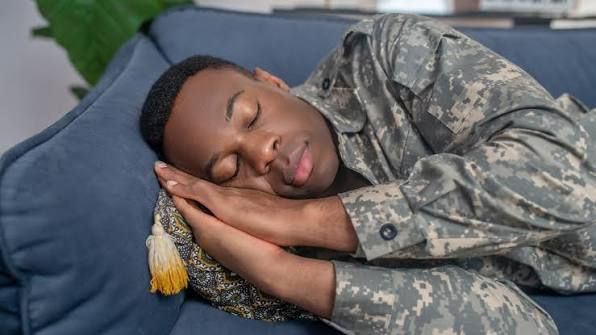
When you are tossing and turning, trying to figure out how to sleep faster, your thoughts can easily spiral. The more you pressure yourself to rest, the more awake you feel. This is called psychophysiological insomnia, where the bedroom becomes associated with frustration rather than relaxation. To break this cycle, you need physiological tools that actively quiet your sympathetic nervous system and shift your body back into a calm state.
Let us look at three scientifically proven, drug-free techniques that show you how to sleep quickly by calming both mind and muscle.
1. The Military Sleep Method
Originally developed to help soldiers rest in high-stress, noisy environments, this physical relaxation technique can teach you how to go to sleep fast, often in under two minutes once practiced consistently:
- Relax Your Entire Face: Close your eyes. Breathe slowly and deeply, consciously relaxing the muscles in your forehead, around your eyes, your jaw, and your tongue. Release all tension.
- Drop Your Shoulders and Hands: Let your shoulders drop as low as possible, releasing any tightness in your neck. Let your hands and fingers relax completely, resting loosely by your sides.
- Exhale and Relax Your Chest: Take a deep breath out, allowing your chest to sink back into the bed. Feel your torso, stomach, and thighs release their tension.
- Clear Your Mind: For ten seconds, visualize a serene scene—such as lying in a comfortable hammock in a pitch-black room. If thoughts creep in, repeat the words “don’t think, don’t think” silently in your mind for ten seconds.
2. The 4-7-8 Breathing Technique
Developed by Dr. Andrew Weil, the 4-7-8 breathing method acts as a natural tranquilizer for your nervous system. It is a highly effective tool when learning how to fall asleep quickly because it increases oxygen intake and stimulates the vagus nerve, which helps slow your heart rate:
- Exhale completely through your mouth, making a gentle “whoosh” sound.
- Close your mouth and inhale quietly through your nose for a mental count of 4 seconds.
- Hold your breath entirely for a count of 7 seconds.
- Exhale completely through your mouth, making another “whoosh” sound, for a count of 8 seconds.
- Repeat this cycle four times in total, letting your body soften with each deep exhale.
— Team Mind Body Dan
3. Progressive Muscle Relaxation (PMR)
If you carry daily stress physically in your body, PMR is a fantastic way to release that built-up tension and learn how to sleep deeply. Start at your toes, tensing the muscles tightly for 5 seconds, and then release them completely for 10 seconds. Slowly move up your body—through your calves, thighs, abdomen, chest, hands, arms, shoulders, and face. This physical contrast between tension and release makes it much easier to recognize and dissolve physical stress as you settle into bed.
To really see if these breathing and muscle relaxation techniques are working, it helps to track how they affect your body’s overnight recovery. By tracking your HRV (Heart Rate Variability), you can see how your nervous system responds to your evening wind-down. A higher HRV overnight is a great indicator that your body spent more time in deep, restorative parasympathetic recovery, helping you wake up feeling refreshed and ready for the day.
Why Screen-Free Recovery Tracking Matters
Many traditional smartwatches track your sleep, but they also bring bright notifications, buzzing alarms, and daily charging anxiety to your nightstand. If you want to optimize your sleep quality, choosing a screen-free tracking method like a lightweight titanium smart ring keeps your evenings distraction-free while still capturing the medical-grade biometric trends you need to build healthy habits.
Optimizing Your Environment and Tracking Sleep Biometrics
Your bedroom should be a sanctuary dedicated solely to rest and intimacy. If your room is cluttered, too warm, or filled with glowing screens, your brain will struggle to quiet down. When looking at how to sleep faster and deeper, optimizing your environment is just as important as winding down your mind.
Keep your room cool, dark, and quiet. Use blackout curtains to block light pollution, and try a white noise machine if you live in a noisy area. Once your bedroom is set up for success, the next step is using objective data to see what is actually working for your body. Many of us try sleep tips without knowing if they actually improve our deep sleep or HRV. This is where a high-quality wearable makes a world of difference.
Unlock Distraction-Free Sleep Insights
Meet the Herz P1 Smart Ring: A premium, subscription-free, ultra-lightweight titanium wearable designed for elegant comfort. It features medical-grade biometric sensors tracking Sleep Stages (REM, Deep, Light), Heart Rate Variability (HRV), and Daily Activity to output an intuitive Recovery Score—without the daily charging hassle or bulky distraction of traditional smartwatches.
The Herz P1 Smart Ring is specifically designed for those who want deep health insights without the headache of subscription fees or bulky smartwatches. Its lightweight titanium design is incredibly comfortable to wear all night long, and its long battery life means you do not have to worry about daily charging. If you prefer a device with a screen or physical buttons to look at during the day, a smart ring might not be your first choice—but for those looking for an elegant, distraction-free way to monitor sleep, it is an ideal solution.
Instead of overwhelming you with hard-to-read graphs, this subscription-free smart ring translates complex biometric algorithms into a simple, actionable daily Recovery Score. This score tells you exactly how prepared your body is for the day ahead, based on your resting heart rate, sleep stages, and HRV. It is a simple, stress-free way to see how your evening habits—like trying a new breathing exercise or skipping late-night snacks—are actually helping you feel better every day.
By combining healthy evening habits with consistent tracking from an elegant health tracker, you can take control of your sleep, say goodbye to restless nights, and wake up feeling truly energized and refreshed.
Learning how to fall asleep fast is not about quick fixes; it is about building a supportive environment and understanding your body’s natural rhythms. Start tonight by setting up a relaxing wind-down routine, keeping screens out of bed, and focusing on gentle relaxation techniques. With a little time and the right insights, you will build a sustainable sleep routine that leaves you feeling restored and ready to take on every day with energy and focus.
Disclaimer: Results may vary depending on individual physical activity levels, unique health conditions, and daily tracking patterns. The content in this article is for informational and educational purposes only and should not be used as medical advice. Always consult with a qualified healthcare professional before making changes to your health, lifestyle, or sleep routines.
