

Tuft and Needle vs Helix Mattress Comparison: Biometric Comfort Guide
Sleep-deprived and overwhelmed? Choosing between mattresses shouldn’t feel like guesswork. Let’s look beyond the marketing hype to compare tuft and needle vs helix using biometric science. Whether you face 3 AM awakenings or non-restorative sleep, we’ll help you find your match and track how it impacts your recovery.
Take Back Your Sleep.
Take Back Your Life.
- Fall asleep faster & sleep deeper
- Stop waking up in the middle of the night
- Wake up refreshed & full of energy
Key Article Takeaways
- Structural Difference: Tuft & Needle features proprietary, open-cell all-foam constructions, while Helix specializes in hybrid mattresses tailored to specific sleeping positions.
- Biometric Impact: Choosing between tuft and needle vs helix can directly affect your deep sleep duration and physical recovery metrics.
- Thermal Regulation: Helix’s hybrid coils provide superior airflow compared to standard foam models, potentially reducing sleep disruptions caused by overheating.
- Objective Tracking: Utilizing a screen-free tracking device, like the Herz P1 Smart Ring, allows you to measure heart rate variability (HRV) and sleep stages to prove if your mattress upgrade is working.
The Biomechanical Showdown: Tuft and Needle vs Helix
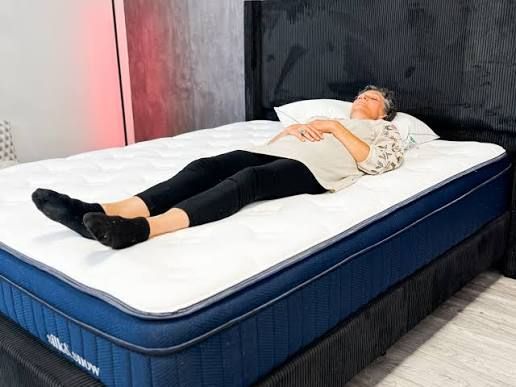
When you suffer from non-restorative sleep, waking up at 3 AM with a racing mind and a stiff lower back, the culprit is often a lack of physical support. Your body’s autonomic nervous system relies on deep physical comfort to transition into restorative sleep stages. When comparing the helix vs tuft and needle options, we are looking at two entirely different design philosophies. One prioritizes simplified, adaptive all-foam comfort, while the other offers specialized hybrid builds targeting custom sleep profiles.
At Mind Body Dan, our mission is to simplify complex sleep metrics and provide actionable wellness insights. To understand how these mattresses impact your physical recovery, let’s first evaluate their core specifications in our breakdown of the tuft and needle vs helix selection.
| Feature / Metric | Tuft & Needle (Original) | Helix (Standard Series) |
|---|---|---|
| Construction Type | All-Foam (T&N Adaptive Foam) | Hybrid (Pocketed Coils + Memory Foam) |
| Firmness Range | Medium-Firm (~6.5/10) | Customizable (Soft, Medium, Firm options) |
| Pressure Relief | Excellent for light/average weights | Superior lumbar support & heavy contouring |
| Heat Retention | Moderate (Graphite/Gel infused polyfoam) | Low (High breathability through coil base) |
| Motion Isolation | High (Foam absorbs surface movement) | Moderate-High (Wrapped coils limit transfer) |
| Ideal Sleep Position | Back and casual side sleepers | Highly specific to your chosen model |
Product Overview: Tuft & Needle
The Tuft & Needle Original is an all-foam mattress engineered to offer a universally appealing, balanced feel. Utilizing two distinct layers of polyurethane foam, including a top layer of proprietary T&N Adaptive Foam, it aims to deliver both contouring pressure relief and bounce. By infusing graphite and cooling gel directly into the open-cell foam structure, the brand strives to counteract the heat-trapping properties typical of traditional memory foam mattresses. It provides a comfortable “on-the-bed” floating sensation rather than a deep, restrictive sink.
Product Overview: Helix Sleep
Helix Sleep takes a personalized approach to sleep wellness. Instead of offering a single mattress designed to satisfy everyone, Helix has engineered a broad lineup of hybrid models (such as the Sunset, Midnight, Twilight, and their Luxe counterparts) tailored to specific sleep positions, body types, and firmness preferences. Every Helix mattress combines pocketed steel coils with specialized foam layers to deliver targeted pressure relief, robust edge support, and enhanced structural durability. This hybrid design is specifically optimized to keep the spine aligned while facilitating active airflow.
How Structural Alignment Influences Sleep Stages
When your mattress fails to maintain proper spinal alignment, your muscles remain tense throughout the night to prevent joint strain. This sustained muscle activation acts as a low-level physical stressor, signaling the sympathetic nervous system to stay vigilant. Consequently, your body struggles to descend into deep, slow-wave sleep. Tracking these transitions with an objective, screen-free wearable can help you see whether a change in mattress comfort directly improves your restorative sleep metrics.
Pros and Cons: Tuft & Needle
The Pros:
- Excellent value for budget-conscious shoppers looking for reliable quality.
- Outstanding motion isolation, which prevents motion transfer from restless partners.
- Lightweight design that makes it exceptionally easy to rotate, set up, and move.
- Proprietary Adaptive Foam offers a responsive bounce, preventing that “stuck” feeling.
The Cons:
- Lacks the deep edge support needed for individuals who sleep near the very perimeter of the bed.
- The all-foam design may feel too soft or offer insufficient support for individuals weighing over 230 pounds.
- May retain more body heat over time compared to hybrid models with a dedicated coil base.
Pros and Cons: Helix
The Pros:
- Highly personalized comfort configurations based on your unique sleeping position and weight.
- Hybrid design with wrapped steel coils provides superior lumbar support and pressure relief.
- Excellent temperature regulation due to the natural airflow passing through the pocketed coils.
- Reinforced edge support provides structural stability across the entire mattress surface.
The Cons:
- Higher price point, particularly for the Luxe and Elite models.
- The hybrid design is heavier and more difficult to move and set up alone.
- May have a slight initial off-gassing odor upon unboxing, typical of hybrid construction.
Target Audience: Who is Each Mattress For?
To settle the tuft and needle vs helix comparison for your own bedroom, you must identify your personal sleep profile. The Tuft & Needle Original is best suited for budget-conscious shoppers, back sleepers, and couples who want a comfortable, low-motion-transfer mattress that minimizes partner disturbance. On the other hand, Helix is the premier choice for side sleepers suffering from hip or shoulder pain, individuals who run hot at night, and sleepers weighing over 230 pounds who require the robust, deep-tier support of steel pocketed coils.
Are You Truly Recovering? Let’s Verify.
Upgrading to the right mattress is an excellent first step toward physical recovery. But how do you prove that your body is genuinely shifting out of a stressed state? Relying on subjective feelings can lead to frustration. The most reliable way to monitor your recovery is by tracking your Heart Rate Variability (HRV) and Sleep Stages with a lightweight, screen-free wearable. By measuring these metrics over time, you can scientifically confirm if your new sleeping surface is actually working.
Sleep Science in Action: Memory Foam vs Hybrid Construction
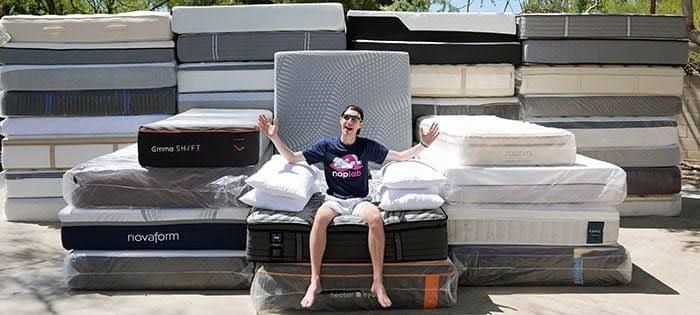
To truly understand how the tuft and needle vs helix comfort levels differ, we must evaluate their underlying structural engineering. The way a mattress distributes weight and regulates temperature dictates how your nervous system functions while you sleep. Restless tossing and turning, caused by heat accumulation or pressure points, triggers micro-arousals. These micro-arousals can disrupt your sleep architecture, pulling you out of restorative deep and REM sleep phases without you even realizing it.
The standard helix vs tuft and needle mattress comparison shows that Tuft & Needle relies on proprietary open-cell polyurethane foam. While this foam is highly breathable compared to cheap memory foam, it lacks the dynamic push-back of steel coils. When you lie on an all-foam mattress, your body weight is distributed across foam cells that compress downwards. For side sleepers, this can cause the heavier areas, such as the hips, to sink too far, placing stress on the lumbar spine.
In contrast, the hybrid design of helix vs tuft and needle models uses hundreds of individually wrapped steel coils beneath contouring foam comfort layers. These pocketed coils compress independently, providing localized push-back that conforms to the natural S-curve of your spine. This structural support reduces muscular tension and allows the body to fully relax, facilitating optimal conditions for deep sleep recovery.
— Mind Body Dan Sleep Science Research
Let’s take a look at temperature regulation. Heat retention is a primary driver of non-restorative sleep and 3 AM awakenings. Your core body temperature must drop by 1 to 2 degrees Fahrenheit to initiate and maintain deep sleep. If a mattress traps heat, your cardiovascular system has to work harder to cool you down, which increases your resting heart rate and lowers your Heart Rate Variability (HRV).
By comparing the breathability of the helix vs tuft and needle comparison, we find that the open-space design of Helix’s pocketed coils allows heat to disperse efficiently. Meanwhile, all-foam models like the Tuft & Needle Original, despite using cooling gel infusions, naturally restrict airflow more than pocketed coils. If you tend to run hot, a hybrid mattress like Helix may help maintain your natural circadian rhythm more effectively.
Bridging the Gap: How to Track and Verify Your Sleep Recovery
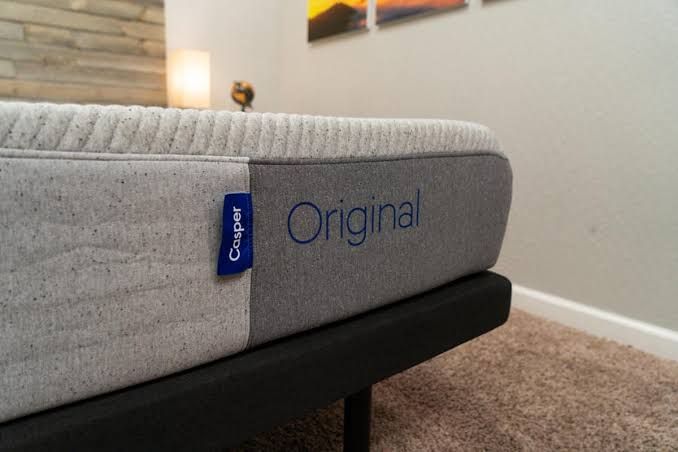
Upgrading your sleep surface can feel like a guessing game. How do you know if your mattress choice is actually improving your sleep quality? Many wellness enthusiasts turn to sleep trackers, but standard smartwatches present several real-world issues. They are often bulky, uncomfortable to wear while sleeping, require frequent charging, and feature bright, glowing screens that can trigger a racing mind right before bed. These screens can tempt you to check notifications at 3 AM, disrupting your sleep and sabotaging your wind-down habits.
This is where a dedicated, screen-free sleep tracking solution becomes invaluable. Rather than introducing digital distractions into your bedroom, a titanium smart ring offers an elegant, comfortable, and objective way to monitor your rest. By tracking your biometric data without screens or buttons, you can easily verify the impact of your mattress upgrade on your sleep and recovery.
An elegant, high-performance wearable like the Herz P1 Smart Ring acts as an expert companion to your sleep wellness journey. Featuring medical-grade biometric sensors, it continuously monitors your vital signs as you rest, providing clear, actionable insights into your recovery without any distracting screens or buttons.
Let’s look at how the Herz P1 Smart Ring compares to standard sleep trackers:
| Tracking Feature | Herz P1 Smart Ring | Standard Smartwatch |
|---|---|---|
| Form Factor & Comfort | Ultra-lightweight titanium; unobtrusive ring | Bulky wristband; prone to sweat and discomfort |
| Screen Distractions | Screen-free (No blue light or notifications) | glowing display; prone to night notifications |
| Subscription Cost | 100% Free (Buy once, own forever) | Often requires a monthly fee for full data access |
| Battery Life | Multi-day tracking on a single charge | Often requires daily charging, leading to data gaps |
| Heart Rate Variability (HRV) | Continuous tracking for recovery scoring | Intermittent tracking; complex, raw data graphs |
The Herz P1 Smart Ring translates complex biometrics into a single, intuitive Recovery Score. By measuring your heart rate variability (HRV), resting heart rate, skin temperature, and sleep stages (deep, REM, and light sleep), it helps you easily monitor how your body responds to changes in your sleep environment, such as switching from a tuft and needle vs helix support system.
If you’re wondering how a mattress change affects your physical recovery, your HRV trends will provide the answer. HRV is a direct window into your autonomic nervous system. A higher HRV indicates that your body is in a relaxed, parasympathetic-dominant state, allowing for deeper cellular repair. Conversely, a low HRV suggests that your physical recovery is compromised, which can be caused by muscle tension, joint strain, or poor spinal alignment from an unsupportive mattress.
Additionally, tracking sleep stages allows you to see how long you spend in deep and REM sleep. If you choose between the responsive support of the tuft and needle vs helix models, the Herz P1 Smart Ring will show whether your time in deep sleep increases, providing objective confirmation that your mattress upgrade is working.
While the Herz P1 Smart Ring is an exceptional wellness tool, it’s helpful to consider its practical limitations. It is not designed for athletes who need real-time GPS maps on their wrist during outdoor runs, and it doesn’t display smartphone notifications. Instead, it is purposely designed for people who want an elegant, screen-free tracker that helps them disconnect from technology and focus on genuine recovery.
Ultimately, choosing between the universally comfortable Tuft & Needle and the customized support of Helix comes down to your personal sleep style. Regardless of which mattress you choose, tracking your sleep with a comfortable, screen-free wearable like the Herz P1 Smart Ring allows you to verify your recovery and make data-informed decisions for your long-term health and well-being.
Disclaimer: Results may vary depending on individual physical activity levels, unique health conditions, and daily tracking patterns. This article is for informational purposes only and does not substitute for professional medical advice, diagnosis, or treatment.
