

12 Best Foods That Help You Sleep and Boost Melatonin Naturally
Struggling with non-restorative sleep and late-night racing thoughts? What you eat directly impacts your sleep stages and heart rate variability (HRV). Incorporating natural melatonin-boosting foods can transform your sleep quality. Discover how tracking these physical changes with the screen-free Herz P1 Smart Ring helps you pinpoint exactly what works for your unique biology.
Take Back Your Sleep.
Take Back Your Life.
- Fall asleep faster & sleep deeper
- Stop waking up in the middle of the night
- Wake up refreshed & full of energy
Key Highlights
- Nutrient Synergy: Combining tryptophan, magnesium, and melatonin-rich foods maximizes natural sleep hormone synthesis.
- Circadian Regulation: Certain foods that help you sleep act as direct precursors to serotonin and melatonin, helping to regulate your biological clock.
- The Tracking Gap: Dietary adjustments are highly individualized; monitoring biometric variables like Heart Rate Variability (HRV) and deep sleep stages determines what truly works.
- Screen-Free Recovery: Traditional smartwatch screens emit blue light and disrupt rest; an ultra-lightweight, screen-free titanium ring offers a non-disruptive tracking alternative.
How Nutrition Shapes Your Sleep Architecture
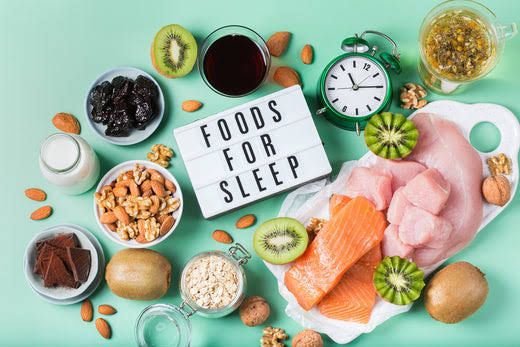
We have all experienced it: you crawl into bed physically exhausted, yet your mind is racing at a million miles per hour. You stare at the ceiling, watching the hours tick away toward morning, knowing that tomorrow will bring a haze of brain fog and irritability. When we suffer from non-restorative sleep, our first instinct is often to turn to screens for distraction or seek over-the-counter sleep aids. However, our team at Mind Body Dan believes the most sustainable path to restful nights begins on your plate and is monitored through precise, screen-free biometric tracking.
Your sleep architecture—the cyclic transition between Light, Deep, and REM sleep stages—is heavily regulated by neurotransmitters and hormones. What we consume during the day, and specifically in the hours leading up to bedtime, serves as the raw chemical building blocks for these sleep-inducing compounds. By deliberately selecting foods that help you sleep, you provide your body with the nutrients required to transition smoothly into a parasympathetic (rest-and-digest) state.
Table of Contents
Our Selection Criteria: Science Meets Simple Tracking
When evaluating foods to help sleep, we did not rely on wellness trends. Our team examined the clinical evidence surrounding three specific nutritional pillars:
- Tryptophan Availability: An essential amino acid that serves as a direct precursor to serotonin, which your brain subsequently converts into melatonin.
- Magnesium Content: A critical mineral that binds to gamma-aminobutyric acid (GABA) receptors, calming central nervous system activity.
- Exogenous Melatonin: Direct dietary sources of melatonin that can assist in shifting your biological clock.
Crucially, we also integrated a biometric component. Because every individual’s metabolic rate and digestive system are unique, the only way to know if a specific sleep food is improving your rest is to monitor objective physiological trends. Using a dedicated tracker like the Herz P1 Smart Ring allows you to observe how various dietary changes directly alter your resting heart rate, sleep stages, and overnight HRV trends.
Quick Summary: Sleep Solutions & Tracking
| Solution / Food | Primary Active Agent | Impact on Sleep Architecture | Best Time to Consume/Use |
|---|---|---|---|
| Tart Cherry Juice | Natural Melatonin & Proanthocyanidins | Increases sleep efficiency and duration | 1-2 hours before bed |
| Raw Almonds | Magnesium & Tryptophan | Calms muscle tension, stabilizes blood sugar | Small handful after dinner |
| Fresh Kiwifruit | Serotonin & Antioxidants | Reduces sleep onset latency (time to fall asleep) | 2 medium kiwis 1 hour before bed |
| Herz P1 Smart Ring | Infrared Biometric Sensors | Tracks REM, Deep, HRV, and Recovery Score | Continuous night & day wear |
Detailed Solutions: Top Sleep Foods & The Herz P1 Smart Ring
Let us explore the dietary options and tracking tools that can help quiet a racing mind and support restorative physical recovery.
1. Tart Cherries (The Exogenous Melatonin Champion)
Montmorency tart cherries are one of nature’s premium sources of phytomelatonin. Unlike synthetic options, a food rich with melatonin works in harmony with your body’s naturally occurring digestive processes.
- Strengths: Clinically proven to increase sleep time and sleep efficiency; high in anti-inflammatory polyphenors which help lower physical stress.
- Weaknesses: Natural tart cherry juice contains fruit sugars that may cause minor blood sugar spikes if consumed in large quantities immediately before sleeping.
- Ideal User: Individuals experiencing early-morning awakenings or jet lag who require natural circadian rhythm support.
2. Walnuts and Almonds (The Magnesium & Healthy Fat Stabilizers)
These nuts provide a potent combination of sleep-promoting ingredients: magnesium, tryptophan, and heart-healthy monounsaturated fats. Magnesium helps lower cortisol levels, keeping your autonomic nervous system from firing stress signals during the night.
- Strengths: Extremely shelf-stable, easy nighttime snack, helps prevent nocturnal hypoglycemia (blood sugar crashes that wake you up at 3 AM).
- Weaknesses: High caloric density; overeating nuts before bed can strain digestion and elevate resting heart rate.
- Ideal User: Busy professionals who experience physical tension or wake up frequently in the middle of the night.
3. Kiwifruit (The Serotonin & Folate Booster)
Studies suggest that eating two kiwis before bed can significantly improve sleep onset latency and total sleep duration. This effect is largely attributed to kiwifruit’s high concentration of serotonin and antioxidant compounds like vitamin C.
- Strengths: High in dietary fiber, which supports gut health (where the vast majority of our body’s serotonin is produced).
- Weaknesses: High acidity can trigger acid reflux in sensitive individuals when consumed lying down.
- Ideal User: People who find it difficult to transition from active wakefulness to quiet restfulness in the evening.
4. The Herz P1 Smart Ring (The Ultimate Screen-Free Tracking Companion)
Dietary modifications are merely guesses until you have clean, objective physical data to evaluate. The Herz P1 Smart Ring stands out as an exceptionally designed wearable that tracks your body’s true recovery metrics. Crafted from polished, medical-grade titanium, it sits comfortably on your finger, completely free of any bright screens, annoying vibrations, or sleep-disrupting blue-light displays.
Instead of waking up to scroll through complicated, confusing wellness graphs, this premium, subscription-free smart ring provides an intuitive daily Recovery Score. By analyzing your Sleep Stages (REM, Deep, and Light), Heart Rate Variability (HRV), and resting heart rate patterns, the ring shows you exactly how your late-night food choices affect your nervous system’s ability to recharge.
Why the Herz P1 Smart Ring is Different:
- Zero Subscription Fees: Pay once, own forever. Say goodbye to the monthly subscriptions popular among modern wearables.
- No Bulky Watch Screens: Sleep naturally without a heavy watch rubbing your wrist or glowing with unexpected notifications.
- Long Battery Life: Spend less time charging and more time gathering continuous recovery data.
- Strengths: Screen-free titanium design, highly sensitive biometric sensors, no hidden monthly app fees, and an incredibly light profile.
- Weaknesses: Does not feature real-time on-wrist screen notifications (which is actually a major benefit for sleep hygiene!).
- Ideal User: Health-conscious individuals seeking comfortable, distraction-free sleep tracking to optimize their biological recovery patterns.
Our Final Recommendations
To build the ultimate night-time routine, we recommend combining target dietary components with physical verification:
- First Choice for Natural Melatonin: Tart Cherry Juice (organic, unsweetened).
- First Choice for Muscle Relaxation: Raw almonds or walnuts, consumed 2 hours prior to sleeping.
- First Choice for Progress Tracking: The Herz P1 Smart Ring, worn continuously on your index or ring finger.
The Top Foods to Help Sleep and Boost Melatonin

If you are constantly tossing and turning, searching for foods that help you sleep can be a game-changer for your bedtime routine. Rather than relying on synthetically generated sleep aids, incorporating natural, nutrient-dense ingredients can naturally stimulate your body’s sleep processes. Let’s delve into the science behind some of the most effective food sources and explore how they interact with your sleep neurochemistry.
Many people do not realize that certain foods to help sleep contain high concentrations of specific vitamins and minerals that act as physical catalysts. For instance, vitamin B6 is a crucial co-factor that helps convert tryptophan into serotonin. Without adequate intake of these micronutrients, even high-tryptophan meals may not translate into the desired sleep outcomes.
“The gut is often referred to as our second brain. By nourishing it with sleep-promoting foods rich in complex carbohydrates, healthy fats, and amino acids, we are supporting the very neural pathways that allow our brain to enter restorative slow-wave deep sleep.”
— Team Mind Body Dan Research
When we look for foods with melatonin, walnuts, pistachios, and grape skins stand out. Pistachios, in particular, have been found to contain remarkably high levels of melatonin compared to other plant sources. Enjoying a tiny handful of unsalted pistachios after dinner can serve as an elegant, natural alternative to synthetic sleep supplements.
However, it is vital to understand that dietary responses are deeply unique to each person’s genetic makeup and daily energy output. For some, a carbohydrate-heavy snack can induce sleepiness, while for others it may cause nighttime heart rate spikes and lower your overall recovery score. By monitoring how your heart rate stabilizes overnight, you can easily check your metrics using a screen-free wellness tracker. Rather than stressing over a late-night snack, let the data show you how your body actually responds.
Finding a food rich with melatonin is only half the equation. You must also ensure that your lifestyle habits support natural hormone production. For example, sitting under glaring overhead lights while eating foods to make u sleep can entirely counteract the natural melatonin synthesis process. Melatonin is a highly light-sensitive hormone; your body will suppress its release if your eyes register blue-spectrum light, regardless of how many tart cherries you consumed earlier in the evening.
That is why pairing sleep hygiene practices with a screen-free tool is so impactful. By tracking your autonomic nervous system trends on your Herz P1 titanium ring, you can determine if a small, healthy snack before bed enhances or impairs your Deep and REM sleep stages.
Connecting Diet to Biometrics: Tracking Your Recovery Screen-Free

To truly understand the value of sleep tracking, we must look at the autonomic nervous system. Your heart does not beat at a perfectly constant speed; instead, the interval between consecutive heartbeats varies naturally by milliseconds. This variance is known as Heart Rate Variability (HRV). When you are resting well and your nervous system is in a balanced, parasympathetic state, your HRV is typically higher, indicating a high state of physical recovery and adaptability.
Conversely, if you consume heavy, complex meals, high amounts of sugar, or alcohol close to bedtime, your digestive system must work overtime to process these nutrients. This digestive strain keeps your sympathetic nervous system (“fight-or-flight”) active throughout the night. As a result, your resting heart rate remains elevated, and your overnight HRV drops, which is why monitoring your biometric trends with a wearable recovery tracker is crucial.
Unfortunately, many modern smartwatches designed to monitor sleep end up disrupting it. Heavy watch bands trap sweat, and screens that accidentally light up in the middle of the night can startle you awake, instantly releasing a small spike of cortisol. Furthermore, the constant barrage of daily step goals and active vibrations on your wrist can introduce unnecessary digital anxiety to what should be a peaceful evening routine.
This is why screen-free monitoring via a comfortable, lightweight titanium ring is so liberating. The ring quietly gathers your cardiovascular biometrics while you sleep, allowing you to access these simple insights on your phone the following morning when you are fully awake. You get all the scientific advantages of medical-grade biometric monitoring without any of the screen distractions.
Reclaim Your Night-Time Freedom
Are you ready to stop guessing and start knowing how your dietary choices, screen habits, and bedtime routines truly affect your rest? By eliminating distracting screens and monthly subscription fees, we highly recommend trying the Herz P1 Smart Ring to take control of your long-term health journey.
By committing to simple dietary changes—like substituting your late-night sugary snacks with natural foods to help you sleep—and tracking your biological progress, you can build a highly customized sleep routine that supports long-term mental clarity and physical vitality.
A Quick Bedtime Protocol for Better Sleep:
- 3 Hours Before Bed: Complete your last large meal to allow your heart rate to drop naturally before sleep.
- 2 Hours Before Bed: Enjoy a light, sleep-friendly snack like unsweetened tart cherry juice or a small handful of almonds.
- 1 Hour Before Bed: Turn off bright screens and dim your indoor lights to let your eyes signal natural melatonin synthesis.
- All Night: Let your screen-free ring track your deep sleep, REM sleep, and overnight HRV trends.
Your physical health is a continuous feedback loop. When you supply your body with targeted nutrients and track the results objectively, you replace nighttime frustration with peace of mind. We invite you to explore the natural pathways of sleep and enjoy the clarity of screen-free health insights.
