

Does a Full Moon Affect Your Sleep and Cause Insomnia? Science-Backed Facts
Ever find yourself tossing and turning at 3 AM during a full moon, battling sudden brain fog the next day? You aren’t imagining things. Science confirms lunar cycles affect our circadian rhythms. Let’s explore how to monitor these natural shifts screen-free with the Herz P1 Smart Ring.
Take Back Your Sleep.
Take Back Your Life.
- Fall asleep faster & sleep deeper
- Stop waking up in the middle of the night
- Wake up refreshed & full of energy
Key Article Highlights
- The Lunar Connection: Peer-reviewed research demonstrates that sleep cycles shorten and shift during the full moon phase.
- Hormonal Mechanics: Increased natural evening light and endogenous circalunar rhythms suppress melatonin levels.
- Biometric Impacts: Heart Rate Variability (HRV) and deep sleep stages decline, leading to non-restorative rest.
- Screen-Free Solutions: Elegant, lightweight wearables like the Herz P1 Smart Ring offer subscription-free, non-invasive sleep tracking.
The Reality of Lunar Insomnia: Does Full Moon Affect Sleep?

Quick Answer
Yes, it absolutely does. The short answer is that evolutionary biology and modern sleep studies confirm a clear relationship between lunar cycles and sleep disruptions. However, to choose the right way to manage this and understand how a does full moon affect sleep pattern impacts your body, you must look closely at biometric data, hormone suppression, and sensory sensitivity.
Detailed Scientific Explanation
For centuries, communities observed that behavior, mood, and sleep changed under a bright night sky. Today, we refer to this phenomenon as full moon insomnia. While once dismissed as mere folklore, rigorous laboratory research has validated these experiences. A landmark study published in Current Biology by Swiss researchers found that around the full moon, brain activity related to deep sleep dropped by 30 percent. Participants also took five minutes longer to fall asleep and slept for 20 minutes less overall, even when kept in a controlled, dark, windowless environment with no knowledge of the current moon phase.
This suggests that humans possess an endogenous “circalunar” clock that runs alongside our 24-hour circadian clock. When evaluating how does a full moon affect sleep, scientists point to two primary biological mechanisms: melatonin regulation and electromagnetic shifts. Melatonin, the hormone responsible for signaling rest to our tissues, naturally dips during the high-illumination days of the lunar cycle. When this happens, our typical sleep architecture is thrown off course, causing us to spend less time in restorative slow-wave (deep) sleep and more time in lighter, easily disrupted stages.
How Do Lunar Cycles Impact Sleep?
During a full moon, natural geophysical and light variations cause measurable physiological changes:
- Melatonin Drop: Decreased production leads to delayed sleep onset and lighter sleep overall.
- Slow-Wave Sleep Reduction: Deep, restorative sleep stages drop by up to 30%, increasing morning grogginess.
- Elevated Core Temperature: Minor metabolic changes keep the body warm, preventing the cool-down required for deep rest.
When to Use This Insight (and When Not To)
Understanding the rhythm of lunar sleep cycle research is highly valuable if you are someone who experiences cyclical patterns of fatigue, brain fog, and unexplained nightly awakenings. Recognizing these natural cycles can help you stop blaming yourself for sudden lapses in recovery or fitness performance. If you struggle with chronic, severe sleep disorders that persist regardless of the moon phase, however, tracking lunar influences alone is not a substitute for clinical evaluation. It is best used as an optimization tool to align your lifestyle, training intensity, and rest with your natural biological rhythms.
Suggested Solutions
To mitigate the effects of moon-induced sleep disturbances, we must focus on rigorous sleep hygiene and precise, non-invasive physiological monitoring. Traditional smartwatches with bright, flashing screens can exacerbate sleep troubles by introducing blue light and notifications right as you try to rest. This is where the Herz P1 Smart Ring shines as an elegant, screen-free solution.
Crafted from ultra-lightweight, medical-grade titanium (weighing just 0.12 ounces), the Herz P1 Smart Ring fits comfortably on your finger without the bulky, heavy feel of a standard smartwatch. By monitoring your sleep stages (REM, Deep, Light) and your Heart Rate Variability (HRV) through its high-precision biometric sensors, it delivers a clear, actionable Recovery Score every morning. This helps you understand exactly how your sleep is responding to different moon phases. Best of all, it offers a subscription-free model, meaning you own all your health and recovery data forever without worrying about hidden monthly fees.
Short FAQ
Q: Why does the full moon wake me up at 3 AM?
A: A combination of natural light pollution and suppressed melatonin levels can make your body highly sensitive to minor disruptions. When you transition from deep sleep to lighter sleep stages, you are much more likely to wake up fully and find your mind racing.
Q: Does the moon affect women’s sleep differently?
A: Yes. Some studies suggest a strong correlation between menstrual cycles, hormonal fluctuations, and lunar phases. This dual hormonal shift can sometimes make women more sensitive to how moon phases impact circadian rhythms, leading to more pronounced sleep disruptions.
Q: Can blackout curtains prevent lunar insomnia?
A: While blackout curtains are excellent for blocking physical moonlight, they do not entirely eliminate lunar sleep changes. Research suggests our bodies respond to underlying circalunar rhythms that function independently of visible light, making comprehensive biometric tracking essential.
How Lunar Patterns Disrupt Biometrics: HRV, REM, and Deep Sleep
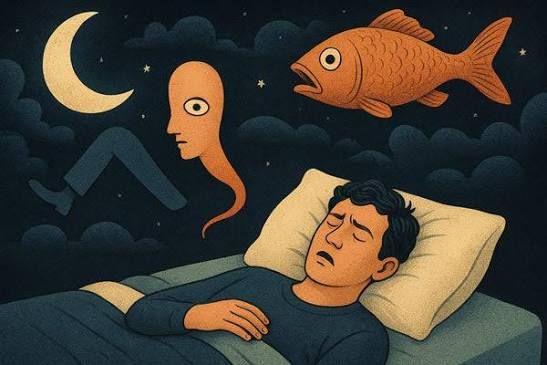
To understand the full scope of how lunar insomnia patterns affect our health, we have to look past the general clock on the wall and focus on what is happening inside our cardiovascular and nervous systems. This is where advanced metrics like HRV (Heart Rate Variability) and sleep stage tracking become essential. Under the influence of lunar effects on REM sleep, our physiology undergoes subtle, measurable shifts that direct how we feel when our feet hit the floor in the morning.
Deep Sleep and REM Disruptions
During a normal night of rest, your brain transitions through several cycles of light sleep, deep sleep (slow-wave sleep), and REM (rapid eye movement) sleep. Deep sleep is when your body undergoes physical repair, tissues regenerate, and your immune system strengthens. REM sleep, on the other hand, is when cognitive processing and emotional consolidation take place.
When a full moon is in orbit, research shows that deep sleep stages are disproportionately shortened. This means that even if you spend eight hours in bed, you might spend only a fraction of that time in the deeply restorative stages your body needs to recover. This lack of deep rest is often why people report waking up with severe physical exhaustion, muscle tightness, and a lack of mental clarity—commonly known as brain fog.
— Team Mind Body Dan
The Role of Heart Rate Variability (HRV)
Heart Rate Variability (HRV) is the measurement of the variation in time between consecutive heartbeats. Controlled by your autonomic nervous system, it is one of the most reliable indicators of physical stress and systemic recovery. A high HRV indicates that your body is in a relaxed, adaptable state, dominated by the parasympathetic nervous system (rest-and-digest). Conversely, a low HRV suggests that your body is under stress, dominated by the sympathetic nervous system (fight-or-flight).
During a full moon, the subtle drop in melatonin and the light sleep cycles can keep your nervous system in a state of low-level alertness. This prevents your heart rate from dropping to its lowest point and causes your night-time HRV to decline. Tracking these variations with high-quality wearable tech can show you exactly how hard your heart is working while you sleep, allowing you to adjust your daily training, diet, and recovery strategies accordingly.
Reclaiming Your Recovery: Screen-Free Solutions for Peaceful Nights
If we want to build a truly resilient, healthy life, we have to protect our bedrooms as sanctuary spaces. This means eliminating glowing screens, reducing light pollution, and breaking free from the habit of constantly checking notifications. To do this effectively, we must bridge the gap between scientific tracking and screen-free living.
The screen-free recovery revolution is here.
Why track your sleep on a device that actively disrupts it? Discover how a lightweight, screen-free titanium ring monitors your body’s true metrics without subscription fees.
The Problem with Traditional Wearables
Many health-conscious people turn to bulky smartwatches to track their sleep. While these devices are full of metrics, they often introduce new problems. A heavy smartwatch can be uncomfortable to wear in bed, leading to fit issues and inaccurate readings if it slides around. Furthermore, watches with bright, touch-activated screens can accidentally light up in the middle of the night, introducing blue light that halts melatonin production. Add in daily charging requirements and constant phone notifications, and your health tracker can quickly become a major source of stress.
Why the Herz P1 Smart Ring is Different
The Herz P1 Smart Ring offers a thoughtful approach to health and recovery. It has no screen, no vibration motor, and no flashing lights to wake you up. Instead, it quietly collects medical-grade biometric data from the blood vessels in your finger—where pulse signals are much stronger and more accurate than those found on the wrist.
By translating complex algorithms into a simple, daily Recovery Score, the Herz P1 Smart Ring makes understanding your health easy. You don’t have to spend your mornings trying to read confusing, multi-layered charts; you get a single, intuitive score that tells you exactly how prepared your body is for the day ahead. This approach helps you plan your workouts, manage stress, and make informed choices about your recovery.
To help you decide if this device fits your routine, here is a balanced look at its key advantages and minor limitations:
Pros & Cons of the Herz P1 Smart Ring
What We Love:
- Subscription-Free: No recurring monthly paywalls to access your own biometric data.
- Ultra-Lightweight: Premium, scratch-resistant titanium weighing only 0.12 oz for absolute night-time comfort.
- Screen-Free: Eliminates notifications and blue light exposure in the bedroom.
- Long Battery Life: High efficiency means you only charge it once a week, not every day.
Considerations:
- No Real-Time Screen: If you want a screen to read text messages or see the time, you will still need your phone.
- No Native GPS: While it tracks active calories and movement, it pairs with your phone’s GPS rather than having a built-in sensor.
Ultimately, your health journey is about learning to listen to your body. By observing how natural cycles like the full moon impact your sleep, and tracking those changes with a simple, screen-free tool, you can make informed adjustments to your routine. Reclaiming your rest does not have to be complicated. With the right tools and a mindful approach, you can sleep soundly through any phase of the moon.
Disclaimer: Results may vary depending on individual physical activity levels, unique health conditions, and daily tracking patterns. This content is for informational purposes only and is not intended as medical advice. The Herz P1 Smart Ring is a wellness tracker, not a medical device, and does not diagnose, treat, or prevent any medical condition.
