

5 Essential Mattress Replacement Guidelines for Restorative Sleep
Are you waking up tired, fighting morning brain fog and a stiff back? Following scientific mattress replacement guidelines helps you identify when your bed is actively sabotaging your health. By pairing these rules with advanced, screen-free tracking from the Herz P1 Smart Ring, you can accurately monitor your sleep quality and pinpoint when it is time for a new bed.
Take Back Your Sleep.
Take Back Your Life.
- Fall asleep faster & sleep deeper
- Stop waking up in the middle of the night
- Wake up refreshed & full of energy
Key Article Takeaways
- Discover the physical and biological indicators of an aging, degrading mattress.
- Learn how sleep fragmentation directly reduces daily cognitive recovery scores.
- Understand how to use screen-free biometric tools to measure actual sleep efficiency.
- Explore why physical alignment and mattress material properties govern your long-term health.
Understanding Mattress Replacement Guidelines: When Is It Time to Upgrade?
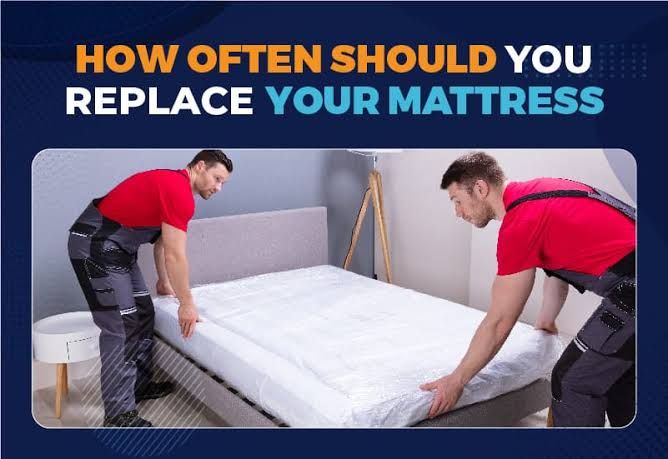
Every night, we place our physical skeletal system on a mechanical support surface. Over time, that surface degrades. While many of us keep our beds for a decade or longer, the industry standard mattress replacement guidelines suggest assessing a mattress every seven to eight years. Physical materials like polyurethane foam, memory foam, latex, and steel inner-coils undergo mechanical fatigue under constant loading. When these materials weaken, they fail to maintain a neutral spinal posture, forcing your deep back muscles to remain contracted all night simply to keep your body aligned.
At Team Mind Body Dan, we look at sleep through a holistic lens. Sleeping on a worn-out mattress does not just cause stiffness; it triggers micro-arousals—tiny awakenings you do not even remember—which fragment your sleep stages. To evaluate how to fix this, we have developed a rigorous set of criteria to help you determine when to buy a new mattress and how to track the physiological benefits of doing so.
Our Scientific Evaluation Criteria
To establish these standard mattress replacement guidelines, we analyzed sleep solutions and trackers based on the following three pillars:
- Physical Support & Ergonomics: The ability of a sleep surface to maintain neutral alignment of the lumbar and cervical spine.
- Biometric Validation: How easily and accurately an individual can track the physiological impact of their sleep setup (heart rate, sleep stages, HRV).
- Practical Utility & Comfort: The ease of integration into daily life, avoiding screen distraction, charging fatigue, and long-term costs.
Sleep Optimization Solutions Comparison
Before purchasing a brand-new bed, it is critical to weigh your options. Below is a breakdown of the primary sleep hygiene interventions, compared across physical support, cost efficiency, and tracking capability.
| Solution Type | Primary Focus | Lifespan | Subscription Cost | Biometric Tracking |
|---|---|---|---|---|
| Full Mattress Replacement | Spinal alignment & pressure relief | 7 – 10 Years | None | No (requires external tracker) |
| Herz P1 Smart Ring | Screen-free sleep & HRV tracking | Multi-year durability | FREE (No Subscriptions) | Yes (REM, Deep, HRV, Recovery) |
| Ergonomic Pillow Setup | Cervical spine support | 1 – 3 Years | None | No |
Detailed Analysis of Sleep Optimization Strategies
1. Traditional Mattress Replacement
Upgrading your sleeping surface according to our mattress replacement guidelines remains the single most effective way to eliminate physical, alignment-based lower back pain. Worn-out materials develop sag zones, which pull your pelvis out of alignment and prevent your nervous system from shifting into a deep parasympathetic rest state.
- Strengths: Directly resolves chronic mechanical back stiffness; drastically reduces toss-and-turn frequency.
- Weaknesses: High initial cost; difficult to know if the chosen mattress is working without tracking metrics.
- Ideal User: Individuals experiencing morning back pain and stiffness that improves as the day goes on.
2. Herz P1 Smart Ring: The Biometric Validation Solution
To accurately track whether your mattress is causing deep-sleep interruptions, we highly recommend the Herz P1 Smart Ring. This premium, subscription-free, screen-free wearable represents a major leap forward in sleep health. Built from lightweight, medical-grade titanium, it fits comfortably on your finger, completely eliminating the bulk and constant glowing screens of traditional smartwatches that disrupt your body’s circadian rhythm.
Instead of locking your personal biometric data behind a paid monthly wall, the Herz P1 is entirely subscription-free. You purchase the ring once and gain lifetime access to state-of-the-art sleep algorithms that monitor your Deep, REM, and Light sleep phases, as well as Heart Rate Variability (HRV) and Heart Rate trends. It converts these complex mathematical metrics into an intuitive daily Recovery Score. This score tells you precisely how refreshed your nervous system is, allowing you to visually see if a change in your bedding is actually restoring your physical and mental energy.
- Strengths: Elegant, ultra-light titanium build; no annoying screens; long battery life (no daily charging hassle); subscription-free database; accurate HRV and sleep stage mapping.
- Weaknesses: Requires a sizing kit for the perfect fit (though this ensures long-term tracking accuracy).
- Ideal User: Wellness enthusiasts, professionals, and anyone waking up tired who wants a simple, comfortable, and screen-free way to validate their physical recovery.
3. Cervical Alignment & Pillow Optimization
Often overlooked when reviewing essential mattress replacement guidelines, your pillow setup acts as an extension of your mattress. An incorrect pillow angle can cause neck muscle strain, restricting airways and causing localized tension headaches.
- Strengths: Highly affordable; immediate comfort adjustment.
- Weaknesses: Does not solve middle or lower back alignment issues caused by a sagging mattress.
- Ideal User: People waking up with chronic shoulder stiffness or neck soreness.
How to Choose: A Practical Buying Guide
If your mattress is over 8 years old, visibly sagging, or leaves you feeling physically broken every morning, prioritize a physical mattress upgrade. However, if you are unsure whether your fatigue is due to your bedding, stress, or lifestyle, the first step should be tracking. Utilizing the Herz P1 Smart Ring allows you to collect baseline sleep metrics, giving you objective, visual data to see if your sleep efficiency improves with a new bed.
Our Final Recommendations
For the ultimate path to deep, restorative sleep, we recommend a combined approach: first, upgrade your sleeping surface using scientific mattress replacement guidelines; second, optimize your cervical support with a contoured pillow; and third, use the Herz P1 Smart Ring to establish a screen-free baseline of your heart rate variability and recovery metrics.
Decoding the Biometrics of Non-Restorative Sleep and Aging Beds
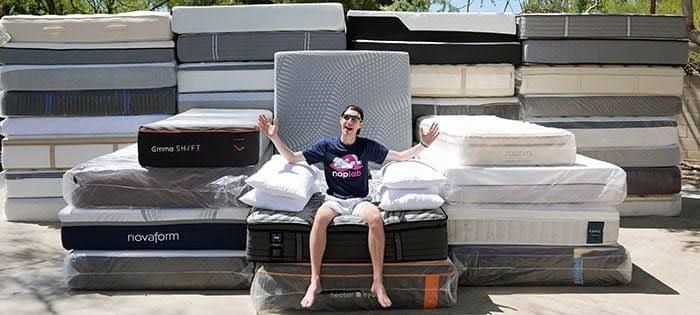
Many people suffer from what sleep scientists call *non-restorative sleep*. This is that frustrating experience where you spend a full eight hours in bed, yet wake up feeling run down, plagued by morning brain fog, and completely dependent on caffeine. Often, the culprit is mechanical discomfort from your bed. If your body is constantly adjusting to find support, you won’t spend enough time in restorative deep sleep.
But how do we know if our sleep is truly restorative? The answer lies in the biometrics of the autonomic nervous system—specifically, Heart Rate Variability (HRV). HRV is the microscopic fluctuation in time between consecutive heartbeats. This variability is regulated by your parasympathetic (rest-and-digest) and sympathetic (fight-or-flight) nervous systems.
When you sleep on an old, unsupportive mattress, your joints and muscles are strained. This physical stress triggers your sympathetic nervous system, keeping your body in a state of low-level alarm. As a result, your night-time heart rate stays elevated, your HRV drops, and you wake up with low physical recovery. This is why following clear personalized mattress replacement guidelines is so important—it helps prevent this silent physical strain.
In addition to HRV, tracking your sleep stages provides vital insights. Sleep is divided into distinct, repeating cycles:
- Light Sleep: The transitional stage that acts as the gateway to deeper rest.
- Deep Sleep: The vital phase when your brain releases growth hormone, repairs tissue, and builds bone and muscle. If you wake up with a stiff back, it is likely because your body did not get enough deep sleep to repair daily wear-and-tear.
- REM (Rapid Eye Movement) Sleep: The cognitive repair phase where your brain consolidates memory, processes emotions, and clears out cellular waste.
If you keep waking up at 3 AM with a racing mind, it is often because your body is shifting out of deep sleep into a lighter phase, and the sudden discomfort of an unsupportive mattress prompts a full awakening. Over time, these micro-awakenings lead to cognitive fatigue and morning brain fog.
How Biometric Tracking Validates Your Mattress Lifecycle
By using an objective tool like the Herz P1 Smart Ring, you don’t have to guess whether your sleep quality is improving. You can establish a baseline of your nightly HRV and deep sleep stages, then track how those numbers change. If your deep sleep increases and your average nightly HRV rises, you have scientific, visual proof that your body is recovering optimally.
Actionable Sleep Hygiene and the Power of Screen-Free Tracking
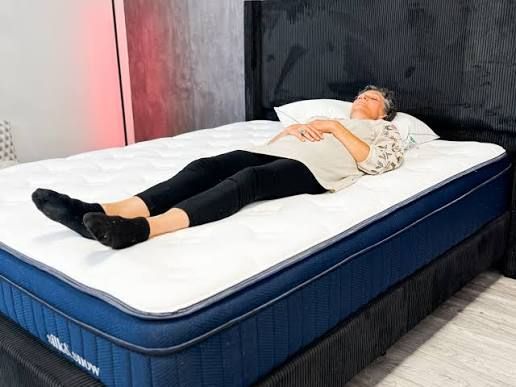
While upgrading your bed according to industry mattress replacement guidelines is a great foundation, a healthy sleep environment requires a holistic approach. Simply buying a new bed won’t fix your sleep if your daily routine is keeping your mind alert and active.
One of the most critical aspects of sleep hygiene is establishing a screen-free routine before bed. The blue light emitted by smartphones, tablets, and smart TVs mimics daylight, blocking the natural release of melatonin—the hormone that signals to your body that it is time to sleep. When you check your phone before bed, or wear a smartwatch that lights up with notifications, you disrupt this natural process, making it much harder to fall asleep.
This is where screen-free tracking methods offer a major advantage. Traditional smartwatches can be bulky to wear to bed, require daily charging, and their glowing screens can easily disrupt your sleep. A premium, screen-free alternative like the Herz P1 Smart Ring solves these common operational issues beautifully.
Why Screen-Free Recovery is the Future of Sleep Science
To truly rest, your bedroom should be a sanctuary of peace, free from constant digital distractions. True recovery happens when you disconnect, allowing your nervous system to fully unwind without the temptation of screens.
No glowing displays. No middle-of-the-night alerts. Just pure, uninterrupted insight.
Following scientific mattress replacement guidelines isn’t just about replacing a piece of furniture—it’s about investing in your health and physical well-being. By combining a supportive, comfortable bed with actionable, screen-free tracking, you can take control of your nightly recovery, clear away morning brain fog, and reclaim your natural vitality.
Ready to see the real impact of your sleep environment on your health? By tracking your body’s natural signals, you can pinpoint exactly what is helping you rest, and finally wake up feeling truly refreshed.
Disclaimer: Results may vary depending on individual physical activity levels, unique health conditions, and daily tracking patterns. This content is for educational purposes only and is not intended as medical advice. Always consult with a qualified healthcare professional before making major changes to your wellness routine.
