

Novaform vs Casper Mattress Comparison: Which Delivers the Ultimate Sleep Recovery?
Struggling with non-restorative sleep, morning brain fog, or persistent 3 AM awakenings? Choosing the right sleep surface is crucial. In this objective Novaform vs Casper mattress showdown, our team analyzes support, materials, and motion isolation, showing how pairing your bed with advanced, screen-free biometric tracking finally helps you decode your sleep quality and unlock complete recovery.
Take Back Your Sleep.
Take Back Your Life.
- Fall asleep faster & sleep deeper
- Stop waking up in the middle of the night
- Wake up refreshed & full of energy
What We Will Cover in This Novaform vs Casper Analysis:
- Spinal Alignment & Comfort: Side-by-side performance of both brands.
- Physical Metrics vs. Biometric Data: How your body responds during Deep and REM sleep stages.
- The Real-World Testing: Motion transfer, edge support, and heat mitigation.
- Optimizing Your Sleep Architecture: Transitioning to a screen-free recovery routine.
Choosing Your Foundation: Novaform vs Casper in the Battle for Spinal Alignment
When we look at the physical environment of sleep, the mattress acts as the primary mechanical support for our skeletal system. A mattress that fails to maintain alignment leads to microscopic muscular contractions throughout the night, causing your nervous system to remain highly active instead of shifting into a restorative parasympathetic state. This mechanical strain is the core of many sleep frustrations, causing people to wake up stiff, sore, and mentally exhausted.
In this section, we compare the mechanical attributes of two heavyweights: the Costco-accessible Novaform and the bed-in-a-box pioneer, Casper. Understanding how they handle weight distribution, temperature, and motion transfer is the first step toward reclaiming your nights.
Novaform vs Casper Performance Comparison Matrix
| Metric | Novaform (Serafina/ComfortGrande) | Casper (Original/Nova Hybrid) |
|---|---|---|
| Pressure Relief | High (Classic memory foam contouring) | Excellent (Targeted Zoned Support™) |
| Motion Isolation | Outstanding (Dense foam absorbs kinetic energy) | Very Good (Slight bounce in Hybrid versions) |
| Temperature Regulation | Moderate (Can retain heat over long periods) | Excellent (AirScape™ perforated foam) |
| Edge Support | Fair (Prone to compression at perimeter) | Good to Excellent (Reinforced Hybrid edges) |
| Best For | Value seekers, side sleepers who love a hug | Active sleepers, hot sleepers, lower back pain |
Product Overview: Novaform
Manufactured by FXI and distributed largely through Costco, Novaform mattresses have carved out a reputation as premium memory foam options without the premium price tag. Popular models like the ComfortGrande and Serafina Pearl focus heavily on thick gel-infused memory foam layers designed to cradle your joints and alleviate pressure points. The overall feel is a classic “sink-in” memory foam experience, which is exceptional for motion isolation if you sleep with a partner who tosses and turns.
Product Overview: Casper
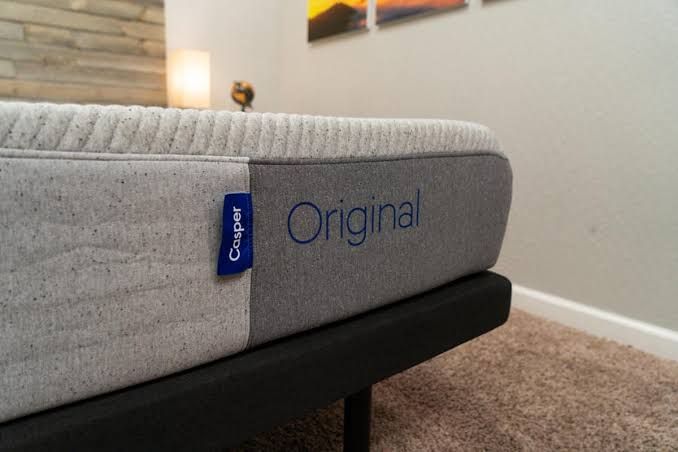
Casper revolutionized the mattress industry with its bed-in-a-box model, focusing on proprietary engineering. The Casper Original and its high-end hybrid variants are characterized by their signature Zoned Support™ system—firmer foam under the hips to keep the spine straight, and softer foam under the shoulders for deep pressure relief. Combined with their AirScape™ technology (perforated open-cell foam designed to cycle warm air away from your body), Casper focuses on high responsiveness, ease of movement, and active temperature management.
Real-World Sleep Experience: Tossing, Turning, and Spinal Realignment
Imagine going to bed with a racing mind, finally drifting off around midnight, only to awaken at 3 AM with a dull ache in your lumbar region and a layer of sweat on your neck. This is the reality of poor mattress-spine integration. When evaluating novaform vs casper, the difference lies in how they address this physical distress.
Novaform’s deep contouring memory foam is incredibly soothing if you suffer from hip and shoulder discomfort. It hugs you in place, which reduces the urge to toss and turn. However, if you are a combination sleeper, that “stuck in the mud” sensation can make changing positions feel like a chore, occasionally causing brief micro-awakenings that disrupt your deep sleep cycles.
Casper, on the other hand, provides a more buoyant, “on-top” feel. The ergonomic zones work actively to support the natural curvature of your lower back. When you turn, the responsive foam rebounds quickly, minimizing the physical effort required to move and keeping your brain in a deep, restorative sleep state.
Pros and Cons
Novaform Pros:
- Exceptional value for budget-conscious shoppers.
- Dense foam layers practically eliminate motion transfer from restless partners.
- Comforting, joint-cradling contouring that is excellent for side sleepers.
Novaform Cons:
- Heavier memory foam can trap body heat over the course of the night.
- Lacks advanced edge support, which can feel unstable when sitting on the bed.
Casper Pros:
- Zoned Support™ excels at keeping the lumbar spine aligned.
- AirScape™ design keeps the sleeping surface noticeably cooler.
- Highly responsive foam prevents that frustrating “sinking” feeling.
Casper Cons:
- Significantly higher price point compared to Novaform’s budget model.
- All-foam models have average edge support.
Performance Showdown: Heat and Edge Compression
When we look at novaform vs casper comparison metrics, thermal management is a crucial factor. Your body needs to drop its core temperature by 1 to 2 degrees Fahrenheit to initiate and sustain deep sleep. Novaform’s dense structure tends to retain heat, which can raise your heart rate and trigger sweat-induced awakenings. Casper’s perforated open-cell foams allow for continuous airflow, helping your thermoregulation process operate smoothly.
In terms of edge support, the Novaform vs Casper performance is distinct. If you choose a Casper Hybrid, pocketed perimeter coils provide robust edge support. Novaform relies entirely on high-density foam edges, which compress under direct weight, reducing the usable surface area of your bed and occasionally making you feel like you might roll off.
Target Audience
If you want a classic, contouring memory foam feel, shopping at Costco is convenient, and you want to maximize your budget, then a novaform mattress vs casper choice leans heavily toward Novaform. However, if you are dealing with chronic lower back stiffness, sleep hot, or prefer a bed that supports movement, the casper vs novaform mattress comparison points directly to Casper’s targeted support and ventilation.
Verdict
Both mattresses provide solid foundations, but how do you know if your choice is actually improving your sleep quality? Guessing is no longer necessary. By measuring sleep cycles and autonomic nervous system indicators like Heart Rate Variability (HRV), you can easily see if your mattress choice is working.
The Biometrics of Sleep Recovery: Why a Mattress is Only Half the Battle
Whether your personal Novaform mattress vs Casper comparison leads you to Costco or Casper, physical comfort is only part of the equation. Sleep is a dynamic biological process that cannot be fully evaluated by morning stiffness alone. True recovery is measured through physiological biomarkers during your sleep architecture, specifically across your sleep stages and autonomic nervous system activity.
When your body settles into a comfortable sleep surface, several biological mechanisms should ideally occur:
- Deep Sleep (Slow-Wave Sleep): This is your body’s physical recovery phase. Your blood pressure drops, breathing slows, and your pituitary gland releases human growth hormone to repair muscular tissues and bone density. If a mattress causes pressure points, micro-arousals pull you out of Deep sleep before this tissue repair can finish.
- REM Sleep (Rapid Eye Movement): This is your cognitive recovery phase, where your brain consolidates memory and clears metabolic waste. REM sleep is highly sensitive to environmental disruptions like overheating. If your mattress traps heat, your body’s efforts to cool down can disrupt these critical dream states.
- Heart Rate Variability (HRV): Measured in milliseconds, HRV is the variation in time between consecutive heartbeats. A higher HRV indicates that your autonomic nervous system is resting and responding well to stress. When you sleep on an uncomfortable or unsupportive surface, your body must work to protect your spine. This physical stress keeps your sympathetic nervous system (“fight or flight”) active, which lowers your HRV and leaves you feeling drained the next morning.
Scientific Insight: Measuring Spinal Support Biometrically
When a mattress provides ideal support, your body can fully relax. By monitoring heart rate variability (HRV) and deep sleep stages, you can observe this state of rest directly. A successful mattress choice will show a distinct rise in your night-time HRV trends and an increase in Deep Sleep duration, providing clear evidence that your nervous system is recovering.
Instead of guessing if your Casper vs Novaform mattress choice is supporting your recovery, tracking these metrics provides clear, objective data. This is where advanced biometric tracking tools can help, translating complex sleep biology into clear, actionable daily recovery insights.
Optimizing Your Sleep Environment: From Memory Foam to Screen-Free Tracking
Achieving great sleep is about more than just your mattress; it is a complete ecosystem that includes your sleep hygiene, lighting, and how you monitor your health. Many people try to track their sleep using bulky smartwatches, but these often have bright screens, buzz with notifications, and need to be charged every day, which can disrupt the very sleep they are trying to monitor. Waking up at 3 AM to a glowing display can make it even harder to quiet a racing mind.
This common frustration is why sleep experts recommend screen-free, minimalist tracking solutions. Introducing the Herz P1 Smart Ring—an elegant, ultra-lightweight titanium wearable designed to track your sleep metrics quietly and accurately, with no screen to distract you and no monthly subscription fees.
The Screen-Free Recovery Champion
The Herz P1 Smart Ring
Engineered with medical-grade biometric sensors, this subscription-free titanium ring monitors your sleep stages, HRV, and activity level. It simplifies complex health metrics into an intuitive daily Recovery Score—without screen glare or annoying bedtime alerts.
By using the Herz P1 Smart Ring, you can easily see how different mattress options affect your sleep. If you choose the contouring support of Novaform, your Herz P1 data can show you if your deep sleep duration is improving. If you choose Casper’s cooler hybrid surface, your ring can help track whether lower body temperatures lead to better REM cycles.
A smart ring is comfortable to wear and has a 7-day battery life, making it a simple, hassle-free way to monitor your recovery. You can read your data easily on a clean dashboard the next morning, allowing you to see the direct results of your sleep choices over time.
Summary: Reclaiming Your Recovery
Finding the right mattress, whether you prefer the cozy, budget-friendly comfort of Novaform or the responsive, zoned support of Casper, is an important step toward better rest. However, physical comfort is only half the battle. By combining a supportive mattress with a screen-free tracking tool like the Herz P1 Smart Ring, you can clearly measure and improve your sleep quality, helping you wake up feeling truly restored.
Disclaimer: Results may vary depending on individual physical activity levels, unique health conditions, and daily tracking patterns. The content on this blog is intended for educational purposes only and is not a substitute for professional medical advice, diagnosis, or treatment. Always consult with a qualified healthcare professional before making changes to your health regimen or lifestyle habits.
