

Withings Sleep Tracking Mat Review: Is It the Ultimate Way to Understand Restless Nights?
Do you wake up feeling completely drained, battling morning brain fog, and wondering why your rest feels so non-restorative? Tracking your sleep stages and heart rate variability (HRV) can provide answers. In this comprehensive withings sleep mat review, we analyze its accuracy and help you decide if it is the screen-free tracker you need to reclaim your daily recovery.
Take Back Your Sleep.
Take Back Your Life.
- Fall asleep faster & sleep deeper
- Stop waking up in the middle of the night
- Wake up refreshed & full of energy
Key Highlights
- Invisible Tracking: Slip the under-mattress mat once and forget it—zero wearable discomfort or battery anxiety.
- Detailed Biometrics: Tracks light, deep, and REM sleep cycles alongside continuous heart rate monitoring.
- No Charging Required: Draws continuous wall power, eliminating the operational issue of dead batteries in the morning.
- The Travel Trade-off: Stationary design means it cannot monitor your sleep while traveling, nor can it provide daytime activity insights.
- Subscription-Free Alternative: Discover how screen-free wearability bridges the gap for 24/7 recovery metrics.
Choosing the Right Sleep Tracker: An In-Depth Withings Sleep Mat Analysis

Table of Contents
Many of us suffer from a common, frustrating cycle. We experience a racing mind before bed, endure frequent 3 AM awakenings, and wake up with a heavy fog that clouding our productivity. Yet, when we turn to technology for answers, we run straight into a wall of friction. Most sleep monitors require us to wear bulky, glowing smartwatches that pinch our wrists, require daily charging, and distract us with constant notifications. If you are already struggling with non-restorative sleep, the last thing you need is a flashing screen on your wrist reminding you of your stress.
This is where the withings sleep mat aims to change the paradigm. Built as a thin, fabric-covered pneumatic pad that slips directly beneath your mattress, this sensor promises clinical-grade metrics without requiring you to wear anything to bed. But does an invisible, zero-contact sensor truly deliver the level of precision needed to understand your recovery? Our team at Mind Body Dan put it to the test to evaluate its real-world performance, design limits, and algorithm accuracy.
Quick Summary Table
| Evaluation Metric | Rating / 10 | Key Takeaway |
|---|---|---|
| Comfort & Setup | 9.8 / 10 | Completely imperceptible once placed. Set-and-forget style. |
| Sleep Stage Tracking | 8.2 / 10 | Accurately monitors total sleep; occasionally misidentifies quiet wakefulness. |
| Heart Rate Accuracy | 8.7 / 10 | Solid resting pulse tracking through thin-to-medium mattresses. |
| Daytime Recovery Insights | 0.0 / 10 | Stationary; provides absolutely no daytime activity or HRV tracking. |
| Subscription Costs | 10.0 / 10 | No mandatory monthly subscriptions to view your data dashboard. |
Best For: People who absolutely refuse to wear any biometric devices while sleeping, do not travel often, and want to monitor basic nocturnal trends without charging hassle.
Product Overview & How It Works
The withings sleep tracking mat review begins with understanding its mechanical design. The unit features an inflatable air bladder paired with a highly sensitive pneumatic pressure sensor. It connects to wall power via a long cable and links to your home Wi-Fi network. By calibration, the system measures the mechanical movements of your body through the thickness of your mattress. This includes the rising and falling of your chest as you breathe, the physical vibrations of your cardiac contractions (ballistocardiography), and your gross body movements as you toss and turn.
Real-World Experience & Operational Nuances
Setting up the withings sleep analyzer review shows that the physical installation is incredibly straightforward. You lift your mattress, place the pad directly under your chest level, plug it into the wall, and let it calibrate for roughly ten minutes. Once in place, it is completely silent and completely invisible. You do not have to worry about turning on a sleep mode or plugging a wearable device into a magnetic charging dock every single evening.
However, we noticed a few operational limitations during our testing. Because the sensor relies on the transmission of mechanical waves through your mattress, its responsiveness depends heavily on your bed’s construction. If you use an exceptionally thick, dense multi-layer memory foam mattress or a traditional spring mattress with heavy internal dampening, the signal can become muffled. Furthermore, the mat only covers one half of a double or king bed. If you want to track a partner’s sleep, you must purchase a second, separate withings sleep mat, which can quickly double your setup costs.
Pros & Cons at a Glance
Pros:
- Completely contact-free; nothing to wear on your wrist, finger, or forehead.
- Continuous wall power means you never lose data due to a dead battery.
- App simplifies complicated metrics into an easy-to-read daily Sleep Score.
- Integrates seamlessly with smart home automation ecosystems (like Philips Hue or Nest).
Cons:
- Stationary design is completely useless when traveling or staying at hotels.
- Does not track daytime activity, workouts, or stress levels.
- Cannot measure continuous daytime Heart Rate Variability (HRV) for comprehensive recovery scores.
- Dense foam mattresses can occasionally muffle the accuracy of biological readings.
Ultimately, the withings sleep mat is a highly specialized piece of technology. It is built specifically for users who suffer from severe bedtime wearable fatigue. However, if your health goals go beyond simply tracking the time you spend in bed—if you want to understand how your morning jog, afternoon stressful meetings, and daily physical strains directly impact your nocturnal recovery—then a stationary, mattress-bound sensor leaves a massive knowledge gap unfilled.
How Accurate is the Withings Sleep Analyzer? Let’s Look at the Science

When studying the metric precision of any consumer health device, we must look past slick marketing and look directly at raw biometric algorithms. The withings sleep mat attempts to track Sleep Stages (Light, Deep, and REM sleep cycles) by combining heart rate, respiratory rates, and movement patterns. But can a sensor sitting beneath twelve inches of dense foam and spring coils truly track sleep stages as accurately as medical polysomnography (PSG)?
Clinically speaking, the gold standard for sleep staging relies on electroencephalography (EEG) to read electrical activity in the brain. Consumer trackers use indirect signals. To distinguish REM sleep—the state where your most vivid dreams occur and your mind processes emotional stress—the withings sleep tracking mat review looks for a combination of highly irregular heart rates, shallow, variable breathing, and complete muscle paralysis (with zero physical movement). For Deep Sleep, the stage responsible for cellular repair and physical muscle recovery, the algorithm looks for highly regular, slow respiratory rates and a steady, slow heart rate.
— The Mind Body Dan Biometric Testing Group
This is where the distinction between direct-skin contact and indirect sensing becomes critical. A wearable device placed directly against your skin has a massive physical advantage. By utilizing photoplethysmography (PPG) sensors to project light directly into your capillaries, a wearable can track millisecond-level changes in your heart’s pulse-to-pulse intervals. This raw data is known as Heart Rate Variability (HRV).
HRV is the ultimate indicator of your autonomic nervous system’s balance. A high nocturnal HRV indicates that your parasympathetic “rest-and-digest” branch is active, showing that your body is repairing itself efficiently. A low nocturnal HRV, on the other hand, suggests that your sympathetic “fight-or-flight” branch is dominant, indicating unresolved stress, overtraining, or lingering exhaustion. Because of its distance from your body, the withings sleep analyzer review struggle to capture these precise HRV micro-trends as consistently as a skin-contact biosensor.
Addressing the Knowledge Gap and Data Fatigue
Many of us fall victim to data fatigue. We see complex, multicolored charts full of raw statistics but receive absolutely no practical direction on how to fix our tired mornings. The companion app for the withings sleep mat attempts to bridge this gap by calculating a simplified daily Sleep Score from 0 to 100. It bases this score on total sleep duration, depth of rest, regular sleep schedules, and midnight awakenings.
While having an easy-to-read score is fantastic for general health awareness, the stationary nature of an under-mattress mat introduces a major physical gap: it isolates your sleep from your day. Sleep does not occur in a biological vacuum. Your daily activity level, your heart rate variations during stressful work meetings, and your overall daytime physical stress are what dictate your night’s sleep quality. If your tracking device stops monitoring you the second you step out of bed, it cannot help you connect those crucial dots.
Is There a Better, Wear-Everywhere Alternative? Meet the Herz P1 Smart Ring
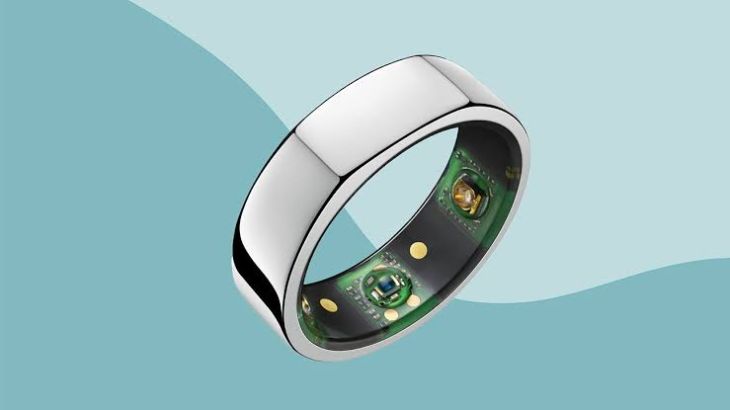
If you want to track your sleep without wearing a bulky smartwatch, but you still want the precise, 24/7 recovery metrics that only a skin-contact sensor can provide, there is an elegant solution. The Herz P1 Smart Ring offers the ultimate middle path. It is a premium, ultra-lightweight titanium wearable that sits comfortably on your finger, completely replacing both bulky screen-based trackers and stationary mattress mats.
Let’s look at how these two very different design philosophies compare when trying to solve your daily recovery puzzle:
| Feature Matrix | Withings Sleep Mat | Herz P1 Smart Ring |
|---|---|---|
| Sensor Placement | Under the mattress (Indirect) | Direct skin-contact on your finger (Highly Precise) |
| Nocturnal HRV Tracking | Limited algorithm extrapolation | Continuous millisecond-level HRV tracking |
| Travel Versatility | Poor (Stays hardwired to your home bed) | Excellent (Goes anywhere you go, global tracking) |
| Daytime Tracking | None (Inactive once you stand up) | Tracks steps, workouts, calorie burn, and stress |
| Monthly Subscriptions | Free (Standard App Features) | Subscription-Free Forever (No monthly costs) |
The Power of Subscription-Free Ownership
A major pain point with modern wearable trackers is subscription fatigue. You buy a premium device, only to find that your detailed sleep stages, HRV trends, and daily recovery insights are locked behind a monthly paywall. If you stop paying, your expensive tracker becomes a glorified step counter.
The Herz P1 Smart Ring rejects this model entirely. Built on a strict subscription-free philosophy, you buy the ring once and own your data forever. Every medical-grade biometric sensor, sleep-stage trend, heart-rate variation graph, and daily activity score is fully accessible in the app without a single hidden fee or recurring charge. This builds a foundation of trust and long-term value that is rare in today’s wearable technology market.
Why the Herz P1 Smart Ring Elevates Your Recovery Journey
By moving tracking from underneath your heavy mattress directly onto your finger, the Herz P1 Smart Ring combines the lightweight, screen-free elegance of a traditional ring with continuous biometric tracking. Sleep Stages, Heart Rate Variability (HRV), and Daily Activity are tracked 24/7 to output an intuitive daily Recovery Score—guiding you precisely on when to push hard and when to rest.
Solving the Bulky Wearable Problem
If you have struggled to wear bulky, wrist-bound trackers to bed, the Herz P1 offers a breath of fresh air. Crafted from hypoallergenic, aerospace-grade polished titanium, the ring is incredibly light, weighing less than a standard wedding band. It features a completely screen-free, smooth inner bezel with micro-recessed sensors, so it won’t disrupt you during those sensitive moments when your body is drifting off to sleep.
Rather than bombarding you with glowing lights, vibrations, or persistent notifications, the Herz P1 gathers your biometrics silently throughout the day and night. When you wake up, it translates this complex data into a single, highly actionable Recovery Score. It tells you exactly how ready your nervous system is for the day’s demands, helping you address the root causes of physical burnout and morning fatigue.
Final Verdict: What’s the Best Way to Reclaim Your Energy?
If you are looking for a stationary sleep tracking solution that you can set beneath your sheets and never think about again, the withings sleep mat is a solid, reliable choice. It provides highly competent respiratory monitoring and basic sleep stage trends, provided your mattress is thin enough to let its pneumatic sensors work.
But if you are ready to take full control of your physical and mental energy—monitoring your sleep stages during business trips, tracking your physical strain during workouts, and watching your HRV recover in real time—the Herz P1 Smart Ring provides a level of precision, elegance, and lifestyle integration that no mattress pad can match. It is the ultimate screen-free, subscription-free path to understanding your body and waking up truly refreshed.
Disclaimer: Results may vary depending on individual physical activity levels, unique health conditions, and daily tracking patterns. The Herz P1 Smart Ring and the Withings Sleep Tracking Mat are lifestyle monitoring tools designed to provide bio-feedback data trends; they are not intended to diagnose, treat, or cure any medical sleep disorders or underlying physical conditions.
