

How Does Latex Density Affect Your Sleep Quality and Physical Recovery?
Do you frequently wake up at 3 AM with a racing mind and a stiff lower back, feeling completely exhausted? While standard sleep hygiene is crucial, the physical support of your mattress—determined heavily by latex density—plays a critical role. By choosing the right sleep surface and monitoring your physiological response with the screen-free Herz P1 Smart Ring, you can finally reclaim deep, restorative sleep.
Take Back Your Sleep.
Take Back Your Life.
- Fall asleep faster & sleep deeper
- Stop waking up in the middle of the night
- Wake up refreshed & full of energy
Key Takeaways:
- Spinal Alignment & Sleep Stages: The latex density of your mattress dictates your spinal alignment, directly impacting deep sleep cycles.
- Dunlop vs. Talalay: Understanding the difference in dunlop latex density vs. Talalay density helps you choose the perfect balance of support and pressure relief.
- Preventing 3 AM Awakenings: Incorrect density leads to micro-arousals and tossing and turning, which disrupt REM and Deep sleep stages.
- Biometric Feedback: Tracking your Heart Rate Variability (HRV) and Recovery Score with a screen-free device like the Herz P1 Smart Ring validates whether your bed is truly supporting your body.
Understanding Latex Density: What It Is and Why It Matters for Deep Sleep
Quick Answer
Yes, it depends on your sleep position and body weight, but the short answer is that latex density is the single most important factor determining mattress support, durability, and pressure point relief. To choose the right mattress, you must understand how the density of latex foam influences your body’s physiological recovery during sleep.
The Physics of Foam: What Exactly is Latex Density?
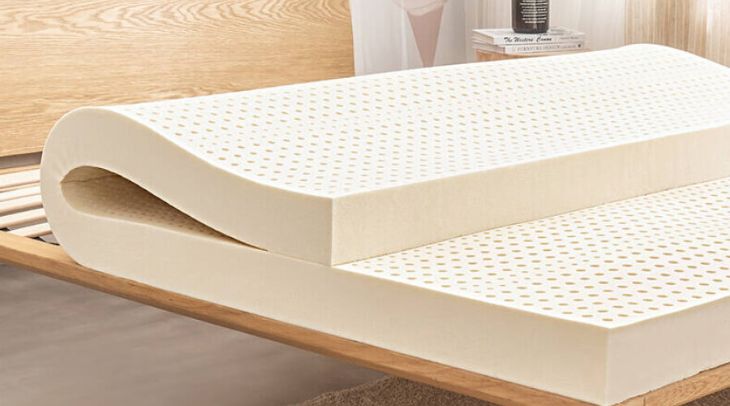
When we talk about latex density, we are referring to the mass of natural or synthetic latex rubber used per unit of volume. This is typically measured in kilograms per cubic meter (kg/m³) or pounds per cubic foot (PCF). Unlike traditional polyurethane or memory foams, natural latex is derived from the sap of the Hevea brasiliensis (rubber) tree. How much of this raw sap is vulcanized into the foam mold determines the overall weight, structural integrity, and longevity of the mattress core.
A higher density of latex foam means there is more actual rubber material and fewer air pockets within the core structure. When you lie down, a high-density support core provides a resilient push-back, preventing your heavier sections—like your pelvis and lower back—from sinking too deeply. If your mattress fails to provide this counter-pressure, your spine is forced out of its neutral alignment. This puts your muscles in a state of constant tension overnight. Instead of resting, your body is actively working to prevent nerve compression, leading to that all-too-familiar feeling of waking up stiff, sore, and plagued by morning brain fog.
- Low Density (55–65 kg/m³): Extremely soft and contouring. Best used as a comfort top layer rather than a support core.
- Medium Density (70–80 kg/m³): The golden standard for back sleepers, providing a balanced blend of body contouring and spinal alignment.
- High Density (85–95+ kg/m³): Heavy, firm, and exceptionally supportive. Crucial for stomach sleepers or individuals with higher body mass.
If you choose a mattress with a latex density that is too low for your body type, the foam will compress completely, causing you to “bottom out” against the hard support slats. This creates painful pressure points on your hips and shoulders, severely interrupting your sleep cycle. Conversely, a latex density that is too high for a lightweight side sleeper can feel like sleeping on concrete, failing to cradle the joints and leaving you tossing and turning throughout the night.
When to Choose High vs. Low Latex Density
To help you self-identify your actual physiological needs, we have compiled the optimal density selections based on sleep styles:
- Side Sleepers: You require a softer comfort layer to prevent hip and shoulder pain. Look for a low-to-medium latex density (60–70 kg/m³) in the top 2–3 inches of your mattress to ensure proper joint cushioning, combined with a high-density core for underlying support.
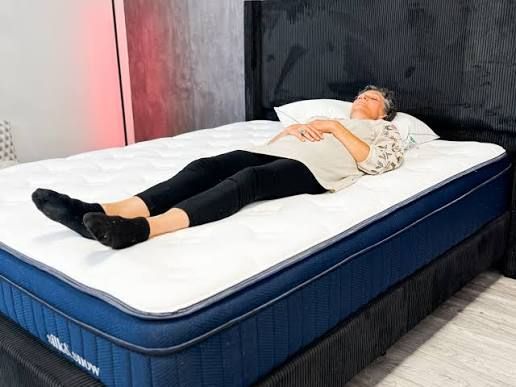
- Back Sleepers: You require even weight distribution across your lumbar region. A medium-to-high latex density (75–85 kg/m³) provides the perfect balance, ensuring your hips remain parallel to your shoulders.
- Stomach Sleepers: Sleeping on your stomach places the highest amount of stress on your lumbar spine. If your hips sink, your lower back arches abnormally. You must select a high latex density (85–95+ kg/m³) to maintain safe spinal alignment.
Suggested Solutions & Biometric Verification
Adjusting your sleep surface to the ideal latex density is a foundational step in your physical recovery. However, how do you know if your mattress adjustments are actually working? How can you tell if that new mattress is actually helping you stay in Deep Sleep longer, or if your tossing and turning has resolved?
This is where objective biometric tracking becomes essential. Subjective feelings of tiredness can be deceptive, but your body’s cardiovascular metrics do not lie. We highly recommend using the **Herz P1 Smart Ring** to track your nightly recovery. Unlike bulky smartwatches that disrupt your sleep and require daily charging, this ultra-lightweight, subscription-free titanium ring sits comfortably on your finger, completely screen-free. It translates complex biometric algorithms into simple, actionable daily metrics—like your resting heart rate, Heart Rate Variability (HRV), and Sleep Stages (REM, Deep, Light). By checking your daily Recovery Score on the companion app, you can objectively see if your new latex mattress is genuinely relaxing your nervous system or if your body is still struggling to recover.
Frequently Asked Questions
Q: Does higher latex density mean the mattress is automatically firmer?
While they are closely related, density and firmness are not identical. Density refers to the mass of raw material per volume, whereas firmness is measured in Indentation Load Deflection (ILD). It is possible to have a high-density natural latex layer that feels soft yet incredibly supportive underneath.
Q: What is the optimal dunlop latex density for a heavy individual?
For individuals weighing over 200 pounds, a support core utilizing a dunlop latex density of 85 kg/m³ or higher is recommended to prevent excessive sinking and protect spinal alignment.
Q: Can a poor mattress density affect my Heart Rate Variability (HRV)?
Yes, absolutely. If your body is uncomfortable, your sympathetic nervous system (“fight or flight”) remains active to protect your joints and spine. This continuous micro-stress prevents your heart rate from dropping and suppresses your HRV, which indicates poor physical recovery.
Dunlop vs. Talalay: The Science Behind the Density of Latex Foam
- The manufacturing differences: Dunlop vs. Talalay
- How density profiles shift during processing
- Spinal alignment and preventing the 3 AM wake-up cycle
- Evaluating your sleep metrics scientifically
When searching for a natural latex mattress, you will inevitably encounter two primary types: Dunlop and Talalay. While both are made from natural rubber sap, their manufacturing processes alter their density profiles dramatically, which in turn changes how they support your body and affect your overall sleep health.
The Dunlop Method: Solid, Resilient Support
The Dunlop process is the traditional method of creating latex foam. Liquid latex is mixed, poured into a mold, and baked. During this process, natural sediments settle toward the bottom of the mold. As a result, Dunlop latex is naturally denser and firmer at its base than at the top.
This structural gradient means that dunlop latex density profiles are naturally supportive and robust. Dunlop is highly recommended for the base support layers of a mattress. It offers excellent progressive resistance, meaning the more weight you apply, the more it pushes back to support you. If you are struggling with a saggy middle or lower back pain, a high-density Dunlop core is often the ideal solution to restore proper spinal alignment.
The Talalay Method: Plush, Air-Filled Cushioning
The Talalay process is a more modern, complex technique. The liquid latex is poured into a mold, but the mold is only partially filled. A vacuum is applied to expand the latex to fill the entire chamber, spreading the rubber particles evenly. It is then flash-frozen to lock the cell structure in place before being vulcanized.
This vacuum and freezing process creates a highly uniform, open-cell structure that yields a much lower overall density of latex foam compared to Dunlop. Talalay feels exceptionally springy, breathable, and soft. It cradles pressure points beautifully, making it an outstanding comfort top layer. However, because of its airy nature, Talalay does not make a suitable core support layer, as it lacks the density required to support heavier body parts over long periods.
- Deep Sleep Preservation: By distributing your body weight evenly, correct density minimizes tossing and turning, allowing the brain to remain in slow-wave sleep.
- Reduced Muscle Guarding: Proper alignment means your muscles do not have to work overnight to protect your spine, lowering your resting heart rate.
- Enhanced HRV: Physical comfort shifts your nervous system into a parasympathetic (rest-and-digest) state, boosting Heart Rate Variability.
How Physical Support Prevents the 3 AM Wake-Up Cycle
Many of us have experienced waking up in the dead of night with a racing mind, instantly blaming stress or a busy schedule. While mental anxiety is a major cause, physical discomfort from a poorly matching mattress is often the primary physical trigger. When your mattress sags because of inadequate understanding latex density, the strain on your lower back or joints signals your brain that something is wrong.
Your brain registers this joint strain as a physical threat, prompting an rush of cortisol and adrenaline. This physical trigger wakes you up completely, and once you are awake, your mind starts racing to find a reason for the alert. By investing in the right Dunlop or Talalay density configuration, you eliminate these micro-strains, allowing your body to transition seamlessly through deep and REM sleep cycles without unnecessary physical awakenings.
Quantifying Your Recovery: How Biometrics Validate Your Latex Density Choices
You can buy the most expensive organic natural mattress on the market, but without objective data, you are still guessing. The connection between physical comfort and neurological recovery is deeply reflected in your biometrics. If your body is resting on a surface with the incorrect latex density metrics, your heart rate will remain elevated and your Heart Rate Variability (HRV) will drop.
The Science of HRV and Physical Comfort
Heart Rate Variability (HRV) is the measure of the time variation between consecutive heartbeats. This metric is controlled by your autonomic nervous system. A high HRV indicates that your body is in a relaxed, parasympathetic state, ready to recover and adapt to stress. A low HRV indicates that your body is under stress, stuck in a sympathetic (“fight-or-flight”) state.
When you sleep on a mattress with a latex density that causes your spine to bend unnaturally, your nervous system remains on alert. The micro-stresses on your ligaments and muscles prevent your body from entering deep, restorative sleep. Your HRV remains low, and you wake up feeling unrefreshed, despite spending eight hours in bed. Conversely, when your spine is fully supported by the correct latex density, your muscles can fully relax. Your nervous system shifts into parasympathetic dominance, your heart rate drops, your HRV rises, and you wake up with a high Recovery Score.
The Screen-Free Tracking Solution
Many health-conscious individuals try to track these metrics using bulky, screen-lit smartwatches. However, these devices can actually work against your sleep recovery. The bright blue light from the watch screen disrupts melatonin production, while late-night notifications trigger a racing mind. Furthermore, the physical bulk of a smartwatch can make sleeping uncomfortable, and having to charge it daily is a constant hassle.
The **Herz P1 Smart Ring** offers a elegant, screen-free alternative. Crafted from ultra-lightweight, medical-grade titanium, it sits weightlessly on your finger, tracking your heart rate, HRV, and sleep stages throughout the night. It operates on a subscription-free model, meaning you buy it once and own your physical data forever, with no hidden monthly fees.
By monitoring how your body responds to your sleep environment, you can make informed decisions. If you change your mattress topper or adjust your latex density, you can use the Herz P1 Smart Ring to see if your deep sleep percentages increase and your resting heart rate drops. This takes the guesswork out of sleep wellness, providing clear, data-informed proof of what works best for your body.
Unlocking the Secrets of Your Sleep
The path to restorative rest requires physical alignment and objective self-awareness. By marrying a high-quality mattress featuring optimal latex density with a screen-free biometric tool like the Herz P1 Smart Ring, you take the guesswork out of recovery. No screens, no subscriptions—just pure, science-backed insights.
Disclaimer: Results may vary depending on individual physical activity levels, unique health conditions, and daily tracking patterns. The content provided is for informational purposes only and is not intended to track, monitor, or serve as medical advice. Always consult a healthcare professional regarding any serious sleep disorders or chronic physical pain.
