

Clinical data from major gynecological registries confirms that only 13% of women actually experience a perfect 28-day cycle with ovulation occurring precisely on the 14th day. If you have been relying on rigid calendar formulas, understanding the dynamic nature of your menstrual cycle is key to taking control of your fertility. This comprehensive is-ovulation-always-on-day-14 guide details how your personal timing shifts and how biological variations impact your tracking. The premium Herz P1 Smart Ring provides precise, subscription-free tracking to monitor these vital physiological shifts in real time.
Built to Last. Save Up to 69% Today.
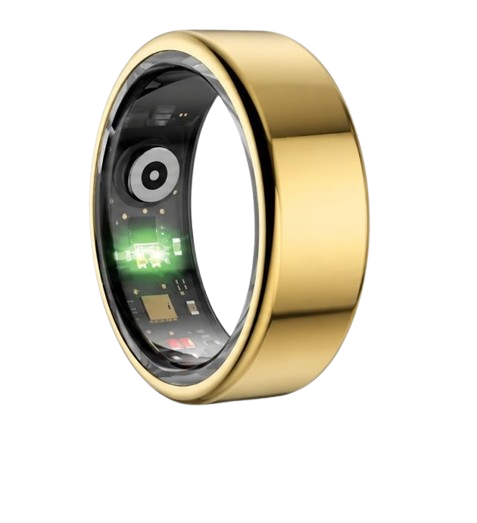
The Herz P1 Smart Ring tracks HRV, Sleep, Heart Rate & SpO2 around the clock. No subscriptions. No renewals. Ever.
In This Article
- The Myth of Universal Day 14 Ovulation: Analyzing the actual medical statistics behind ovulation timing variations.
- The 5W2H Cycle Breakdown: Understanding exactly how, when, and why your body initiates follicle release.
- Biometrics and Wearable Technology: How advanced thermal sensing monitors the hormonal shift.
- The Cycle Sizing Guide: Navigating finger swelling caused by natural estrogen and progesterone fluctuations.
- Smart Ring Feature Comparison: Discovering why subscription-free tracking provides the ultimate personal health solution.
Is Ovulation Always on Day 14? Demystifying the Menstrual Timeline

The belief that every woman experiences ovulation precisely on day 14 of her menstrual cycle is a historical oversimplification.
In clinical reality, ovulation is the biological process where a mature ovarian follicle releases an egg for potential fertilization.
This physiological event marks the boundary between the follicular phase and the luteal phase of your cycle.
Every woman with active ovaries is affected by this timing, yet millions of individuals rely on outdated calendar formulas to predict their fertility.
Medical statistics from the National Institutes of Health reveal that cycle lengths naturally vary from 21 to 35 days.
Consequently, your ovulation day is highly dynamic and can easily occur on day 11, ovulate day 15, or even as late as day 21.
This timing matters enormously whether you are trying to conceive or practicing natural family planning.
Your true fertility window spans only six days in total.
This window consists of the five days leading up to ovulation and the actual day of ovulation itself.
This biological window occurs within the fallopian tubes, where a released egg survives for only 12 to 24 hours.
In contrast, healthy sperm can survive inside the female reproductive tract for up to five days.
The exact timing of this window shifts because your body responds dynamically to external variables.
Hormonal fluctuations triggered by stress, poor sleep, or intense travel can delay follicle maturation.
The follicular phase is highly elastic and responsive to your environment.
Meanwhile, the luteal phase remains relatively stable at 12 to 16 days.
To identify your actual patterns, you must track biomarkers rather than count calendar squares.
Your body signals ovulation through a sharp rise in luteinizing hormone and a subsequent basal body temperature shift.
This thermal shift occurs because progesterone warms your resting body by 0.5 to 1.0 degree Fahrenheit.
By measuring these subtle thermal patterns daily, you can confirm when your personal 14th day of ovulation is actually occurring.
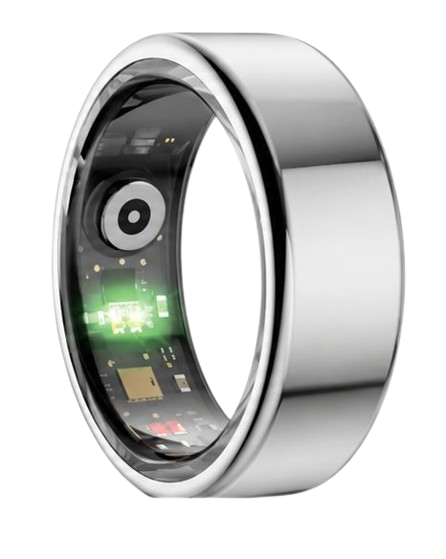
If you want to track this in real time, the Herz P1 Smart Ring monitors your skin temperature trends and resting metrics 24/7 — explore it here.
90-Day 100% Money-Back Guarantee
“The Herz Smart Ring helps me manage stress easily. It’s accurate, stylish, and lightweight—perfect for my busy life!”
— Jennifer P. | ✔ Verified Customer
- ✓ 6-Day Battery Life
- ✓ Detailed Sleep Analysis
- ✓ Fast 1-Hour Charging
- ✓ iOS & Android Ready
Questions? Call: 1-866-479-1629
The Physiological Mechanics Behind Cycle Variation and the Luteal Phase

To understand cycle variation, you must look closely at the two distinct halves of your menstrual cycle.
The first half is the follicular phase, which starts on the first day of menstruation and culminates in ovulation.
During this phase, your brain releases follicle-stimulating hormone to mature selected eggs inside your ovaries.
The velocity at which these follicles mature is highly dynamic and sensitive to your environmental surroundings.
If you experience physical fatigue, acute stress, or poor sleep, your brain may delay sending the signal to release the egg.
This biological delay is why the question is ovulation always on day 14 remains one of the most common medical myths.
A delayed follicular phase means you might easily ovulate on day 18, day 20, or even later.
This plasticity is a protective mechanism designed by nature to prevent conception during times of extreme stress or famine.
Conversely, the second half of your cycle, known as the luteal phase, is incredibly consistent in its duration.
This phase begins immediately after ovulation and lasts until your next period begins.
The collapsed follicle transforms into the corpus luteum, which immediately begins synthesizing progesterone to support your uterine lining.
For almost all healthy women, the luteal phase lasts exactly 12 to 14 days without significant variation.
Therefore, if you naturally experience a 32-day cycle, your actual ovulation date cannot be on the standard ovulation day 14.
Subtracting a fixed 14-day luteal phase from your 32-day cycle reveals that you actually ovulated on day 18.
Relying on generic period tracking apps for women that use static calculations can lead to massive timing errors.
These errors are particularly problematic if you are trying to maximize your chances of pregnancy or practice natural contraception.
Medical literature from the American College of Obstetricians and Gynecologists recommends tracking physiological metrics over calendar math.
By moving away from static online calculators, you gain true clarity over your hormonal health patterns.
Modern physiological research proves that using the best period tracker rings offers a superior, non-invasive method to monitor these shifts.
These ring sensors work silently in the background, freeing you from manual data entry and daily morning testing stressors.
How Biometric Wearables and Basal Body Temperature Trackers Revolutionize Cycle Mapping

For decades, tracking basal body temperature required using a manual oral thermometer immediately upon waking.
You had to lie perfectly still in bed and record your temperature to the nearest tenth of a degree before moving.
Any minor movement, sleep disruption, or variable waking times would immediately invalidate the reading.
Today, optical sensor technology and advanced smart rings have completely modernized this outdated process.
Devices like the Herz P1 utilize multispectral photoplethysmography sensors and ultra-sensitive thermal chips.
These sensors read your skin temperature thousands of times throughout the night at the base of your finger.
By capturing data during your deepest, most stable sleep stages, the system establishes an accurate baseline.
This baseline is completely unaffected by minor morning movements, drinking water, or waking up late.
Many health-conscious women use platforms like natural cycles birth control or tools like the femometer to predict fertile windows.
These digital systems search for the clear, biphasic temperature curve that defines a healthy ovulatory cycle.
Before ovulation, your resting body temperature is dominated by estrogen and remains relatively low.
The moment ovulation occurs, the sudden surge of progesterone causes your baseline skin temperature to climb.
This elevated temperature remains high until your next menstrual cycle begins, confirming that ovulation occurred.
In addition to temperature, tracking resting heart rate and heart rate variability provides crucial hormonal clues.
Your resting heart rate typically rises, and your HRV drops during the progesterone-dominant luteal phase.
These cardiac shifts reflect the mild physical strain of preparing your body for potential pregnancy.
By combining temperature and cardiac data, smart rings solve the ambiguity of is ovulation always on the 14th day queries.
Instead of guessing, you receive a highly customized personal map of your endocrine system.
The Herz P1 delivers all of this advanced clinical-grade biometric monitoring with absolutely zero monthly subscription fees.
The Menstrual Cycle Sizing Guide: Managing Finger Swelling and Wearable Fit
When tracking your cycle with a smart ring, physical fit is directly tied to data accuracy.
Your endocrine system does not just control your reproductive cycle and emotional state.
Hormonal fluctuations actively dictate your body’s water retention and peripheral blood vessel expansion.
During the estrogen-dominant follicular phase, your fingers typically remain at their normal, baseline size.
However, once progesterone levels rise after ovulation, mild fluid retention commonly occurs.
This hormonal shift can cause your fingers to swell by up to half a US ring size, particularly overnight.
If your smart ring is too tight, this swelling can cause discomfort and restrict local capillary blood flow.
Conversely, if you choose a size that is too loose, the optical sensors will lose contact during sleep.
This loss of contact leads to gaps in your nocturnal temperature and resting heart rate data.
To help you navigate these natural shifts, our team has created the ultimate Cycle Sizing Guide.
| Cycle Phase / Time | Finger Volume Trend | Recommended Sizing Strategy |
|---|---|---|
| Follicular Phase (Days 1–13) | Baseline / Normal size | Ensure the ring fits snugly but can rotate with minor resistance. |
| Ovulation Window (Days 14–16) | Slight swelling due to LH surge | The ring will feel secure; do not force it off if it feels slightly snug. |
| Luteal Phase (Days 17–28) | Peak fluid retention / Swelling | If too tight, switch the ring to your non-dominant hand or middle/index finger. |
| Nocturnal Sleep Window | Natural overnight expansion | Always size your ring based on evening measurements when fingers are largest. |
We highly recommend using the Herz P1 sizing kit to test different sizes for a full 24 hours.
Wear the sizing ring through a complete sleep cycle to see how your finger handles overnight expansion.
The ideal size should slide over your knuckle easily but require a gentle pull to remove.
If you experience significant swelling during your premenstrual phase, wearing the ring on your index finger during the day and moving it to your ring finger at night is an excellent strategy.
This flexibility ensures you maintain 100% data continuity without experiencing physical discomfort.
Practical Application: Reading Your Biometric Trends on the Herz P1 App
Once you slip the Herz P1 onto your chosen finger, the companion app immediately begins compiling your baseline.
The app does not present you with confusing, raw numbers that require a medical degree to interpret.
Instead, it translates your skin temperature, resting heart rate, and sleep quality into intuitive trends.
Each morning, you can check the Cycle Tracking dashboard to see your current temperature deviation.
A sustained elevation in temperature over three consecutive days confirms that ovulation has successfully occurred.
You can also use the Heart Rate Variability screen to monitor your physical recovery and daily stress levels.
If you notice your HRV is exceptionally low during your luteal phase, your body is working harder to maintain balance.
You can use this data to adjust your workout intensity, opting for restorative yoga instead of high-intensity training.
The Herz P1 is designed for 24/7 wear, meaning its lightweight, ultra-slim profile is barely noticeable on your finger.
By wearing the ring continuously, you give the AI-driven algorithm the consistent data it needs to refine its cycle predictions.
Bypassing Wearable Pitfalls: Smartwatches vs. Subscription-Free Smart Rings
Many individuals attempt to track their sleep and cycle trends using traditional smartwatches.
However, wearing a bulky, heavy smartwatch to bed is highly uncomfortable and often disrupts sleep architecture.
Furthermore, watches frequently shift during the night, causing optical sensors to lose contact with the skin.
The finger is actually the ideal anatomical location for biometric tracking due to the high density of superficial capillaries.
A smart ring provides far cleaner arterial pulse signals than a sensor resting on the bony wrist.
Another major mistake is falling into the trap of ongoing monthly subscription fees.
Some premium smart ring brands require you to pay a recurring monthly fee just to access your own health data.
Our team believes that your personal biometrics should never be held behind a paywall.
The Herz P1 Smart Ring App is completely free for a lifetime, with no hidden costs or subscription renewals.
This subscription-free model saves you hundreds of dollars over years of consistent health tracking.
Frequently Asked Questions About Wearable Cycle Tracking
Is the Herz P1 Smart Ring waterproof?
Yes, the Herz P1 is fully IP68 waterproof and rated for depths up to 164 feet.
You can safely wear it while swimming, showering, washing your hands, or sitting in a hot sauna.
The military-grade steel outer casing and sealed internal electronics ensure moisture never compromises the sensors.
How long does the Herz P1 battery last on a single charge?
The long-lasting battery provides up to 6 days of continuous tracking under normal conditions.
When the battery does run low, it charges from 0% to 100% in under 1 hour using the included magnetic charger.
This rapid charging capability means you almost never have to miss a night of crucial sleep or temperature data.
Which finger is the best option for wearing the smart ring?
For the most accurate biometric readings, we recommend wearing the ring on your index, middle, or ring finger.
Your index finger generally has the strongest arterial blood flow, which yields the cleanest PPG signals.
However, the ring will perform exceptionally well on any finger that provides a secure, comfortable fit.
Does the Herz P1 store my health data offline?
Yes, the ring features secure onboard memory that stores up to 7 days of health data offline.
You do not need to keep your smartphone nearby or leave Bluetooth on continuously to protect your metrics.
The next time you open the companion app, all your offline data will sync seamlessly in seconds.
Conclusion
Understanding your unique ovulation cycle is the key to mastering your long-term reproductive health.
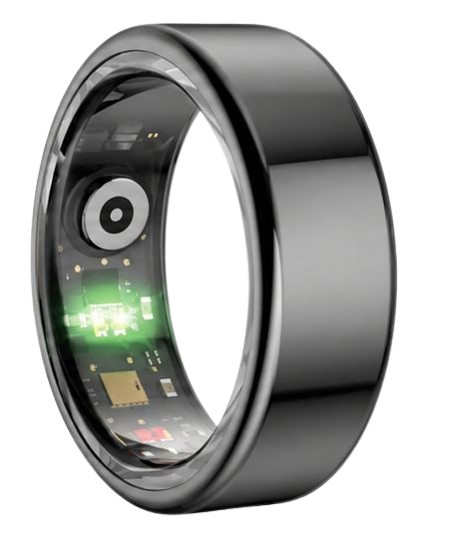
The subscription-free Herz P1 Smart Ring tracks these personal biometric shifts effortlessly with medical-grade precision.
Ready to monitor your health every day? Explore the Herz P1 Smart Ring and see if it fits your lifestyle. Call: 1-866-479-1629 — our team can help you advise on the correct ring size and set personalized health goals.
